Key information
- 🎮 Platform: PC (Steam)
- 📅 Release date: Coming soon
- 🏢 Developer / Publisher: Freshly Baked Games LLC / Future Friends Games
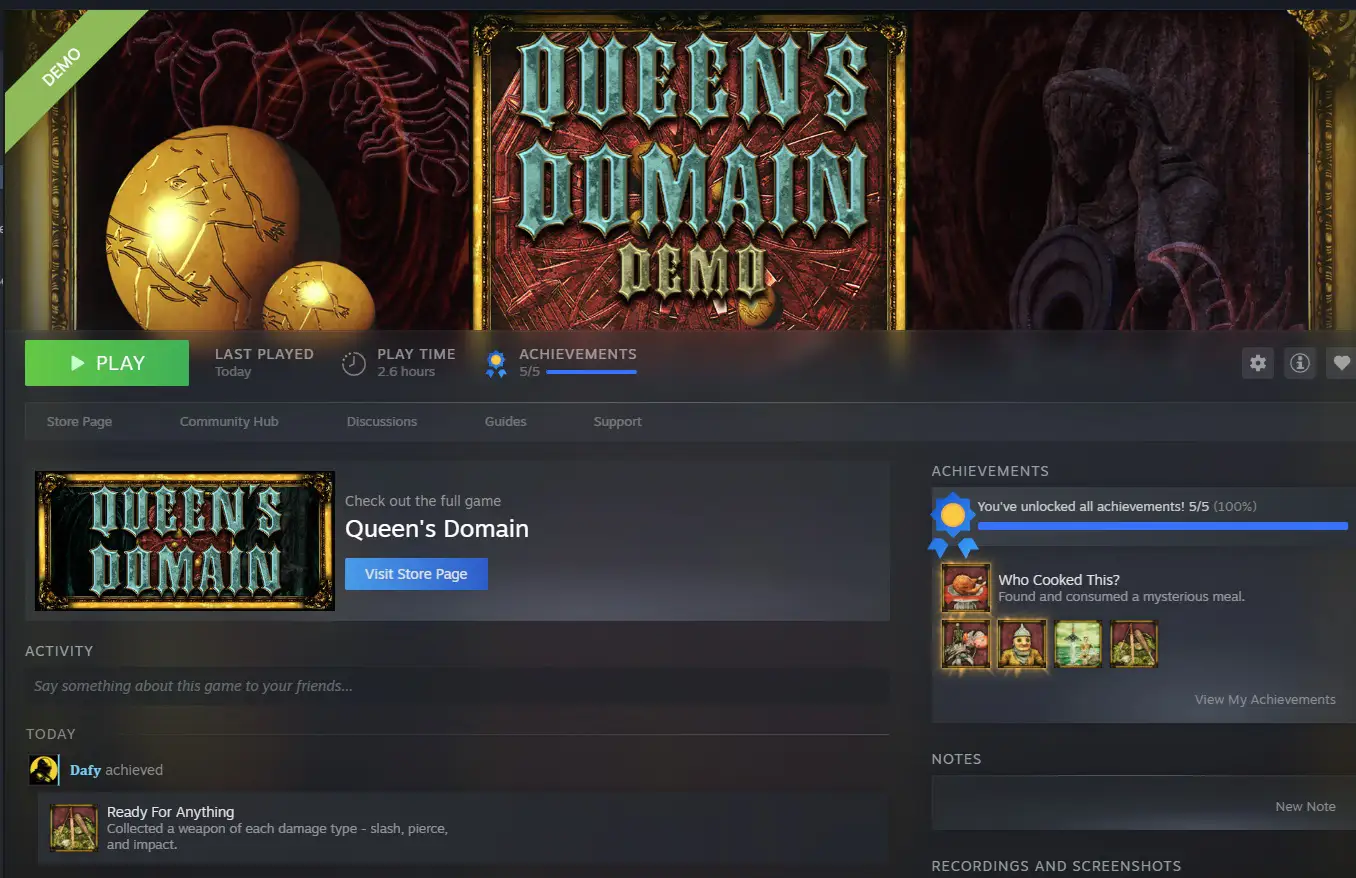
- ⏱️ Playtime: The demo offers 2–3 hours of gameplay
- 🧭 Genre: Action RPG, retro fantasy, exploration
- 🧠 My verdict: 7.2/10 nasty bugs
There’s something special about stumbling onto a demo that catches you off guard. Queen’s Domain appeared at PC Gaming Show: Most Wanted, and its retro look grabbed me instantly. It has that original PlayStation atmosphere mixed with an indie sensibility, all wrapped in a dark fantasy world that feels alive and mysterious. The demo is already available, and after several hours wandering around the island of Neasied, I have some thoughts I need to share.
This game isn’t trying to become the next FromSoftware darling or copy those familiar Soulslikes. It’s… more intimate. Smaller in scale, focused on careful exploration, with stamina-based combat that expects you to think before swinging your weapon like a maniac.
What is Queen’s Domain?
You’re washed ashore on an interconnected island called Neasied, searching for your missing father. No, this isn’t Fallout 4, heaven forbid. The place is crawling with monsters, ancient ruins, and secrets buried in caves that go far deeper than any sensible geography should allow. A Queen has awakened from some ancient slumber, hence the title, and everything about the setting practically shouts classic dark fantasy.
Queen’s Domain is a retro fantasy action RPG. Washed ashore on the island of Neasied, you set out to find your father and uncover the dark heart of this mysterious place.
— Developer Freshly Baked Games, Queen’s Domain Steam page
The setup is simple. No tangled walls of backstory in the opening ten minutes. You wake up with questions, and the island itself becomes your teacher. That’s exactly how an exploration-focused RPG should begin.
Story and atmosphere
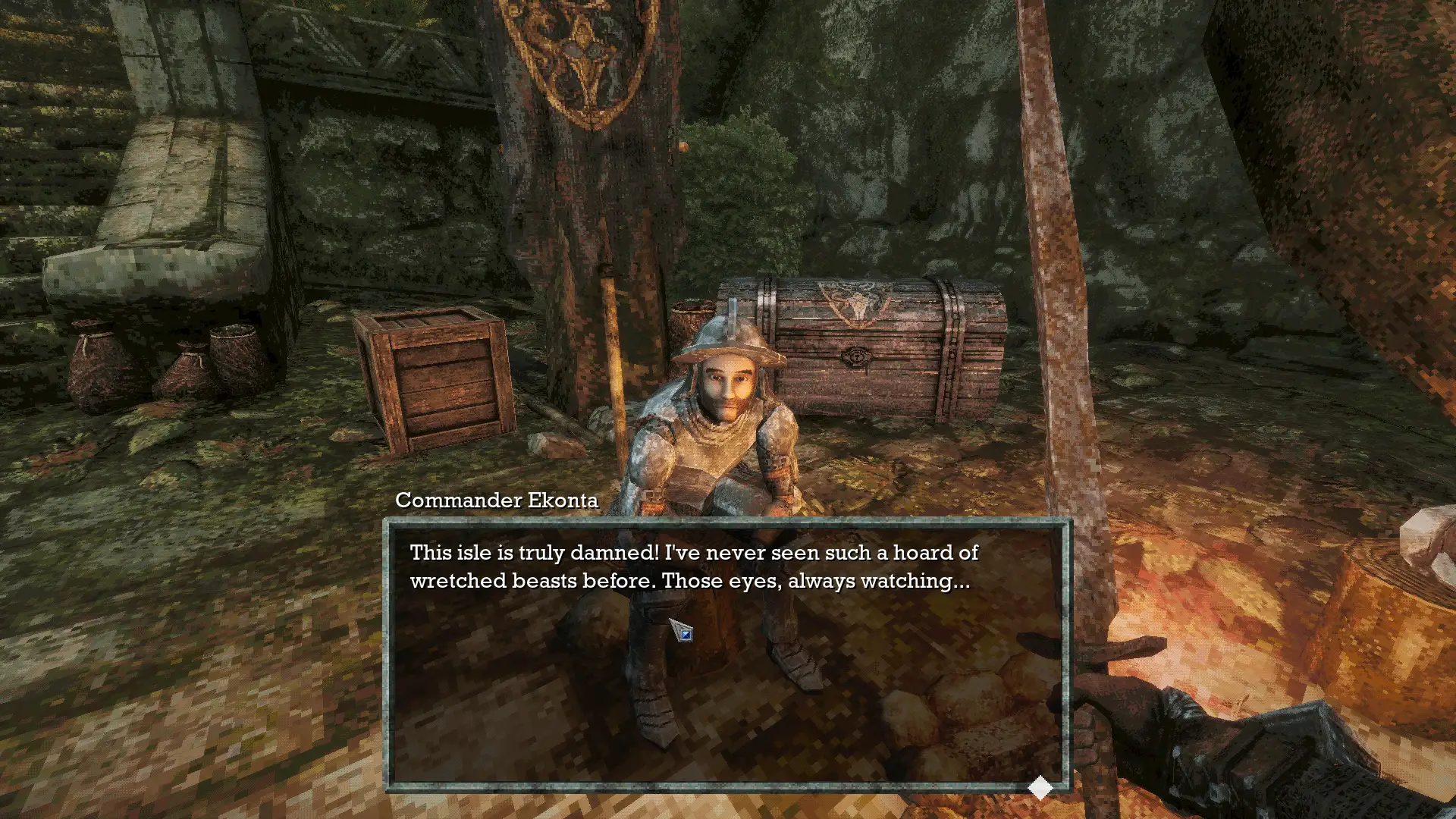
Your father’s missing. The Queen woke up on the wrong side of the bed. And you? You’re stuck on this lump of land in the middle of nowhere, piecing together what happened while avoiding creatures that would very much like to tear your face off.
The interconnected world recalls older games: paths loop back on themselves, shortcuts open up, and you start recognizing landmarks. “Oh, right, I couldn’t get into that area before, but now…” Discovering a world this way always feels different from walking down linear corridors. The island feels like one whole place, rather than disconnected zones stitched together with loading screens.
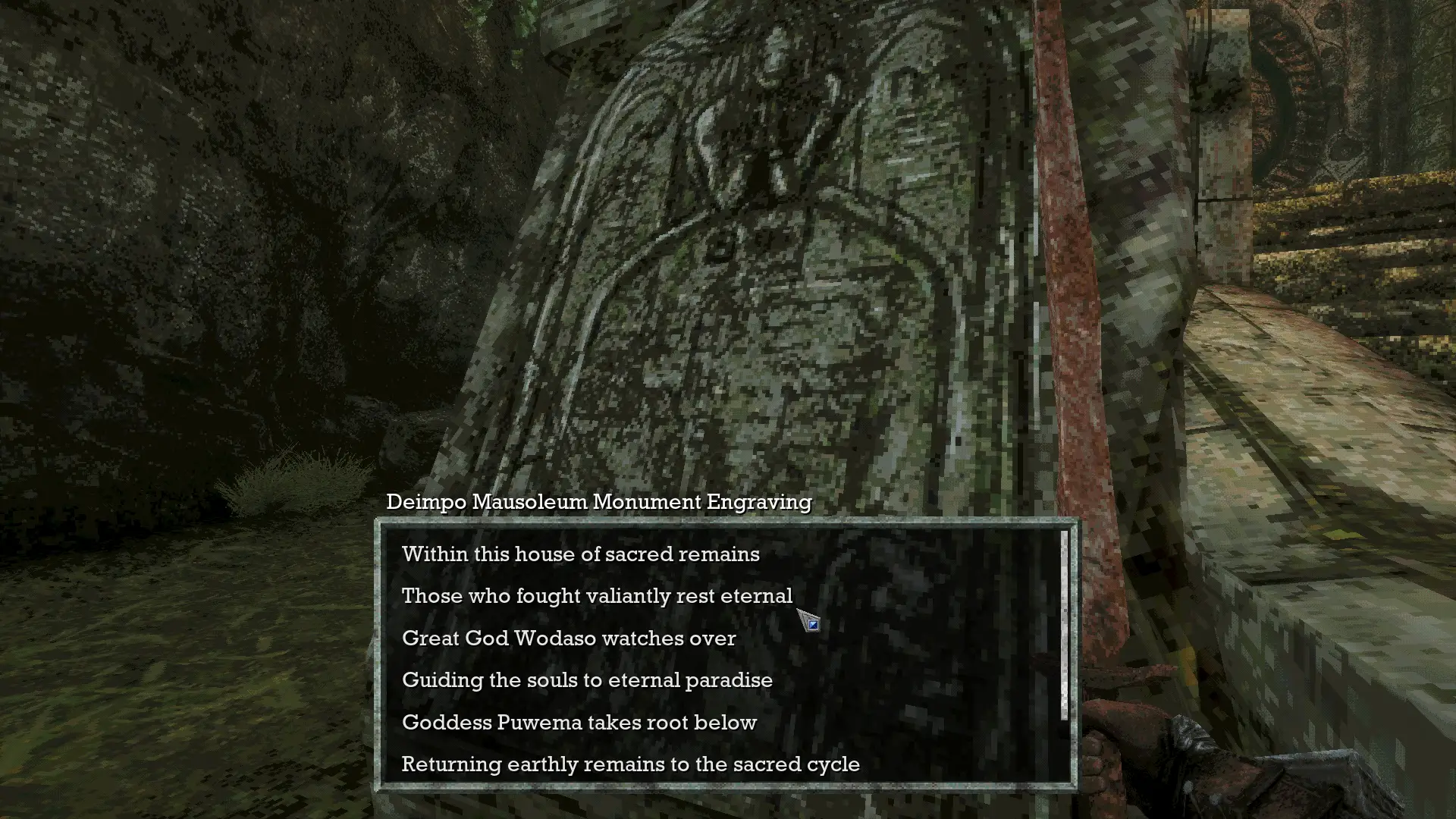
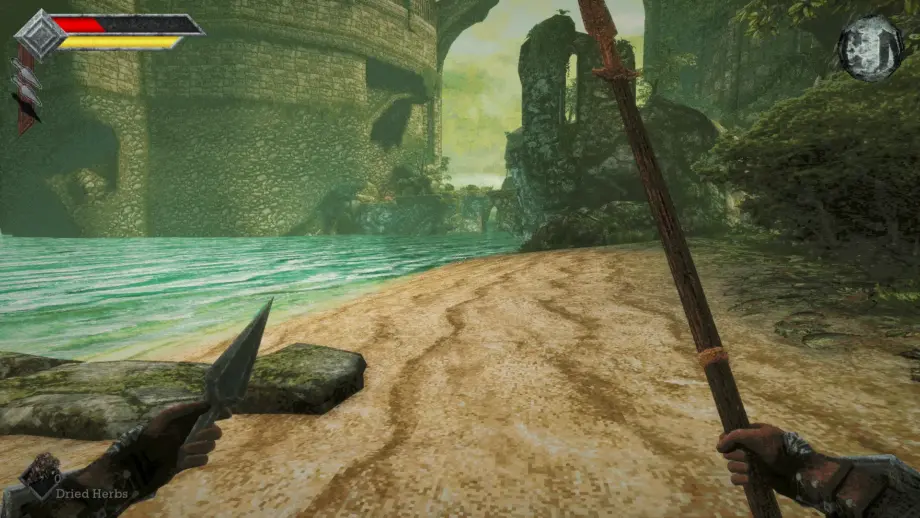
Atmospherically, Queen’s Domain leans hard into its retro look. We’re talking angular polygons, grainy textures, and lighting that creates real unease in dark areas. The ruins feel appropriately ancient, caves disappear into blackness, and there’s a constant sense that you’ve wandered somewhere you shouldn’t be. It’s gloomy without becoming oppressive, balancing mystery and melancholy.
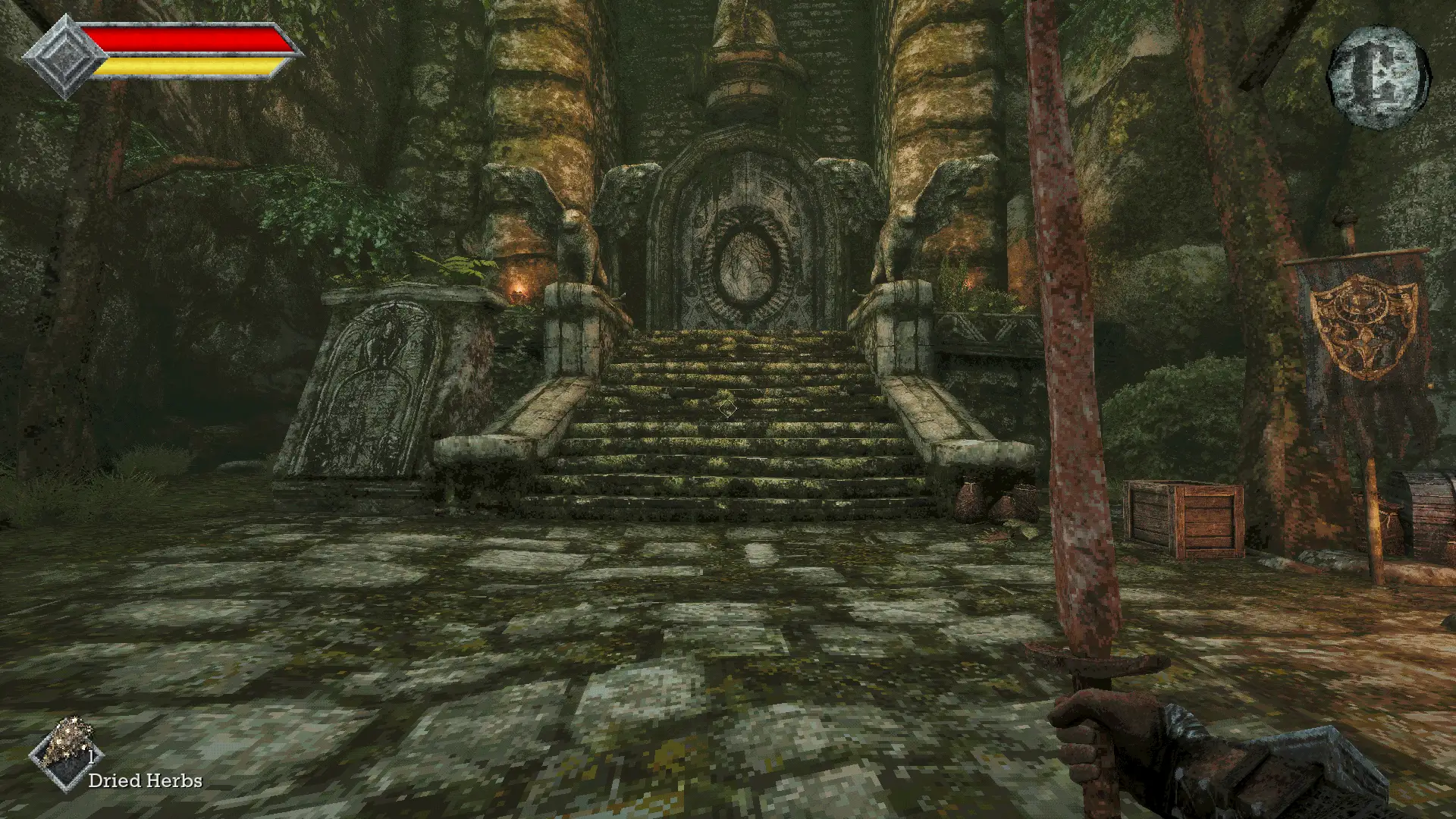
It reminded me of those original PlayStation RPGs where you entered a new area and could almost feel the weight of its history. Not every game needs photorealistic graphics to get its atmosphere right, and this is proof. The retro fantasy presentation does far more for immersion than you might expect.
Gameplay overview
On paper, Queen’s Domain looks fairly straightforward. Explore the island, fight monsters and bosses, level up your character, and gradually unlock new areas through story progress and upgrades. No crafting systems or hundred different currencies to track. Just solid action RPG fundamentals, delivered with confidence.
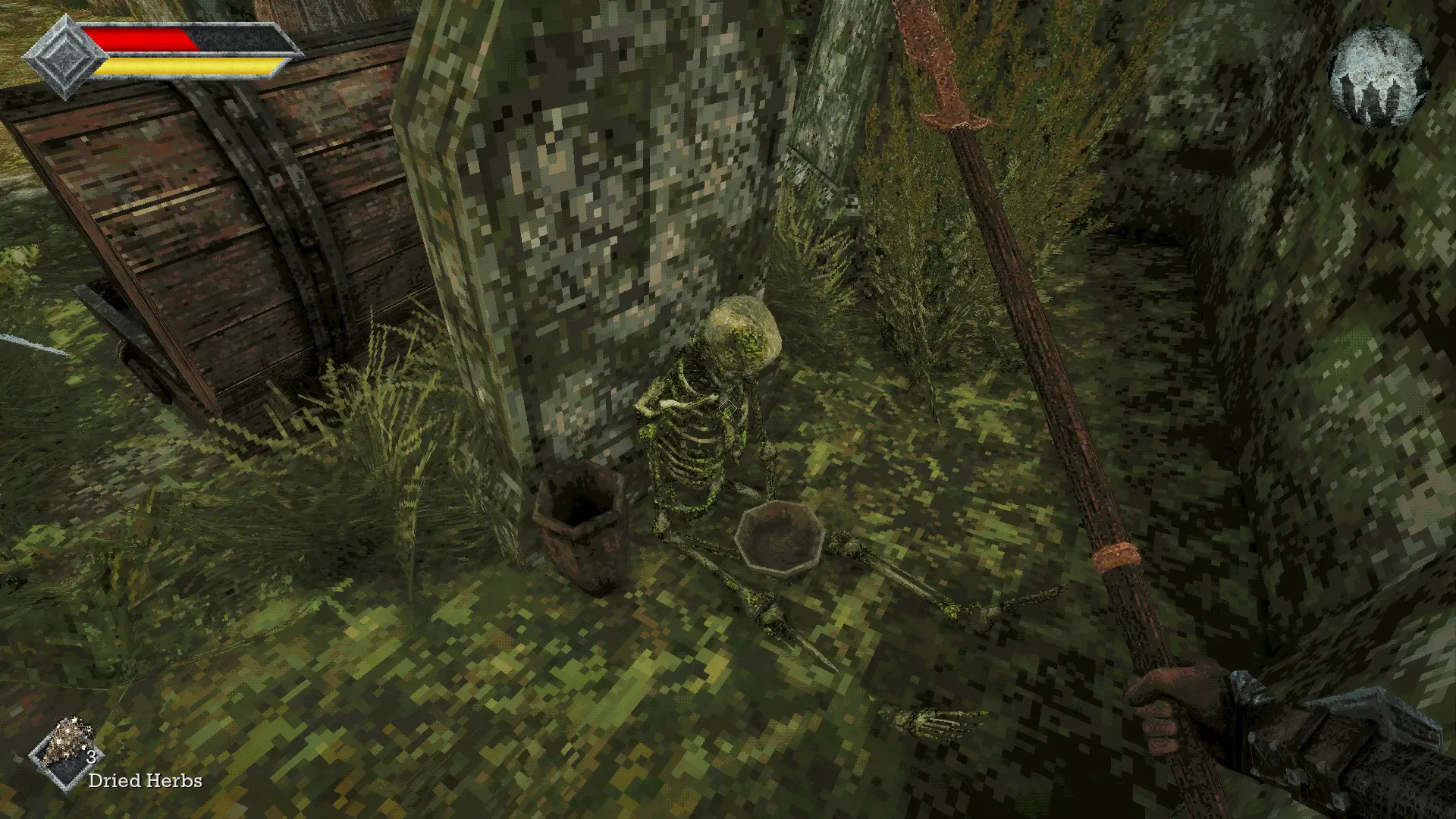
You’re expected to pay attention to your surroundings, manage stamina in combat, and actually learn enemy patterns rather than mash your way through fights. You can see the King’s Field DNA here, with a little more accessibility for modern players.
Exploration and traversal
This is where Queen’s Domain shines brightest. The island is a maze of winding paths, hidden alcoves, and vertical spaces teasing you with unreachable items. You know there’s something up there, but how do you reach it? That tension between curiosity and limitation makes exploration feel natural.
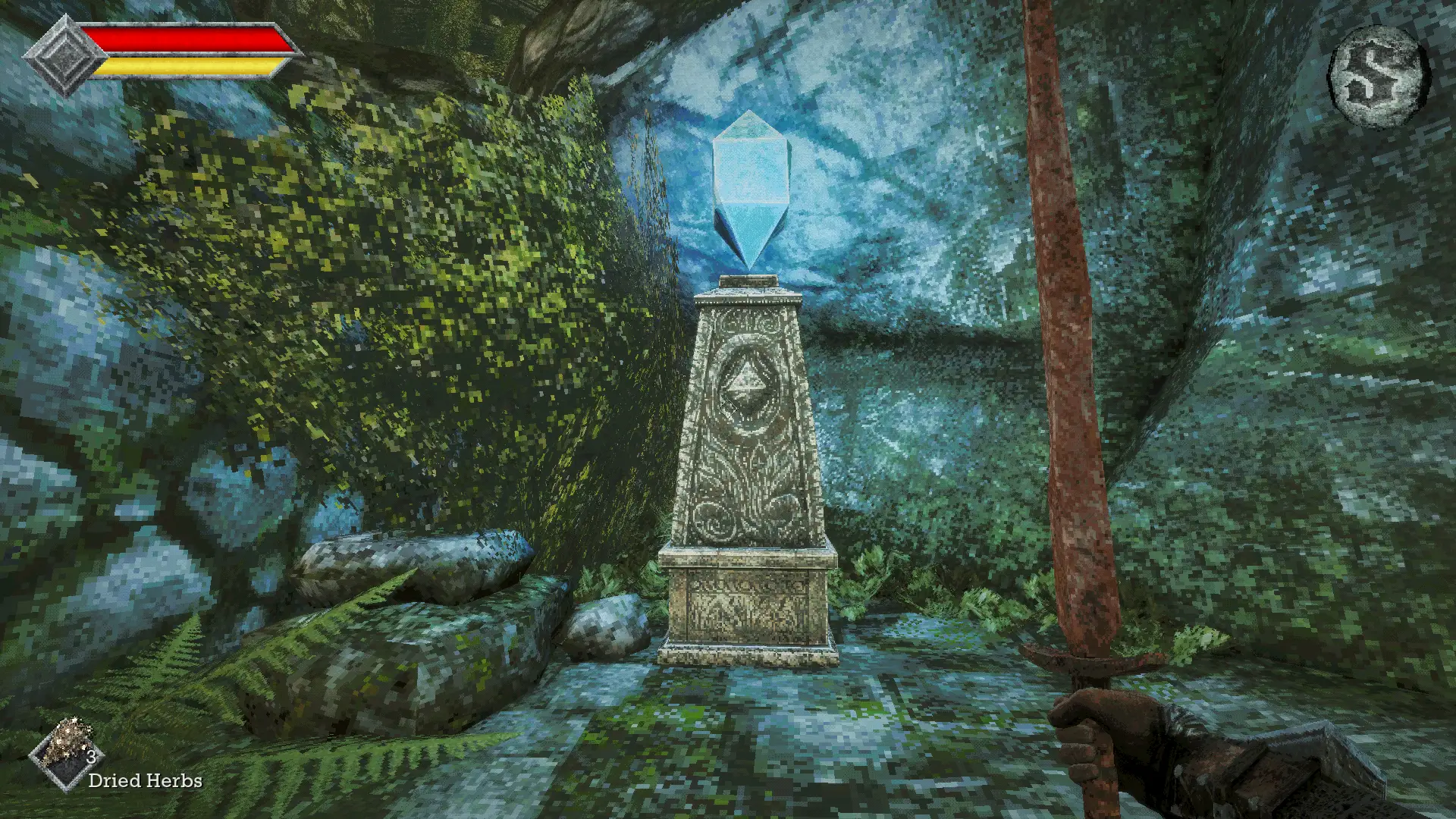
The Holy Sword Endu isn’t usable in the demo; you can only see it, so I can’t say how it changes traversal. What we know so far is that you’ll be able to fly between platforms and extend your range through upgrades. Honestly, that sounds great. Even without it, finding my way around Neasied was satisfying. Discovering a shortcut or a hidden path back to familiar ground always delivered that little dopamine hit.
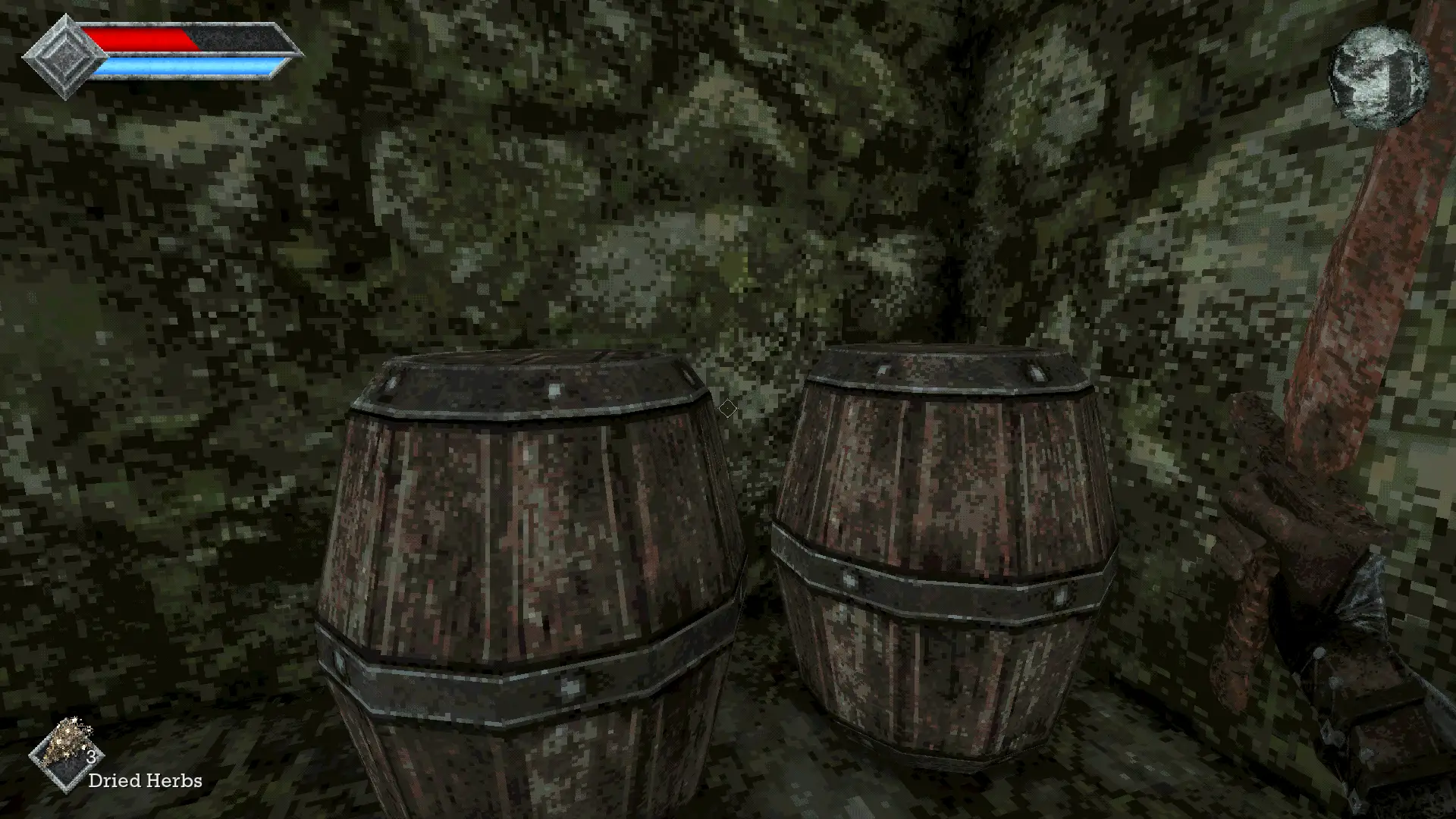
Hunting for secrets and hidden stashes feels organic, rather than like completing a checklist. You spot a suspicious corner, investigate, and sometimes get a reward. Other times it’s just a dead end, which oddly makes the real discoveries feel more earned. The island constantly has you thinking, “I wonder what’s over there?” and actually following that curiosity. Not every open world manages it.
Combat
Here’s where things get interesting… and occasionally frustrating 😅
Combat in the demo is currently stamina-based melee, with special attacks, charged blows, and throwing weapons to mix things up. The game promises more than 50 melee weapons with their own upgrades and special moves, plus over 20 throwing weapons for ranged combat. The demo gives you a taste of that variety, but I can’t judge the full arsenal yet.
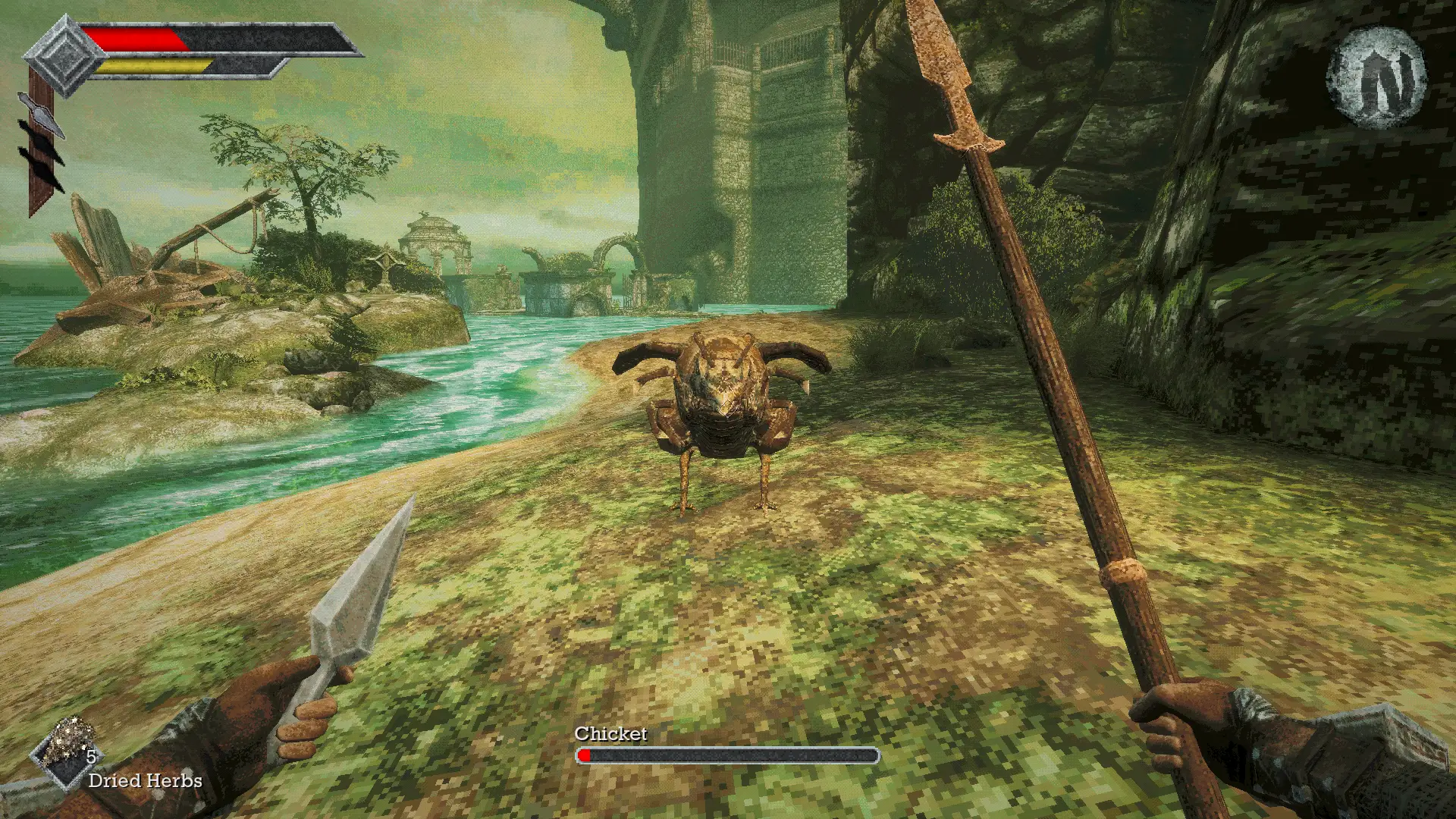
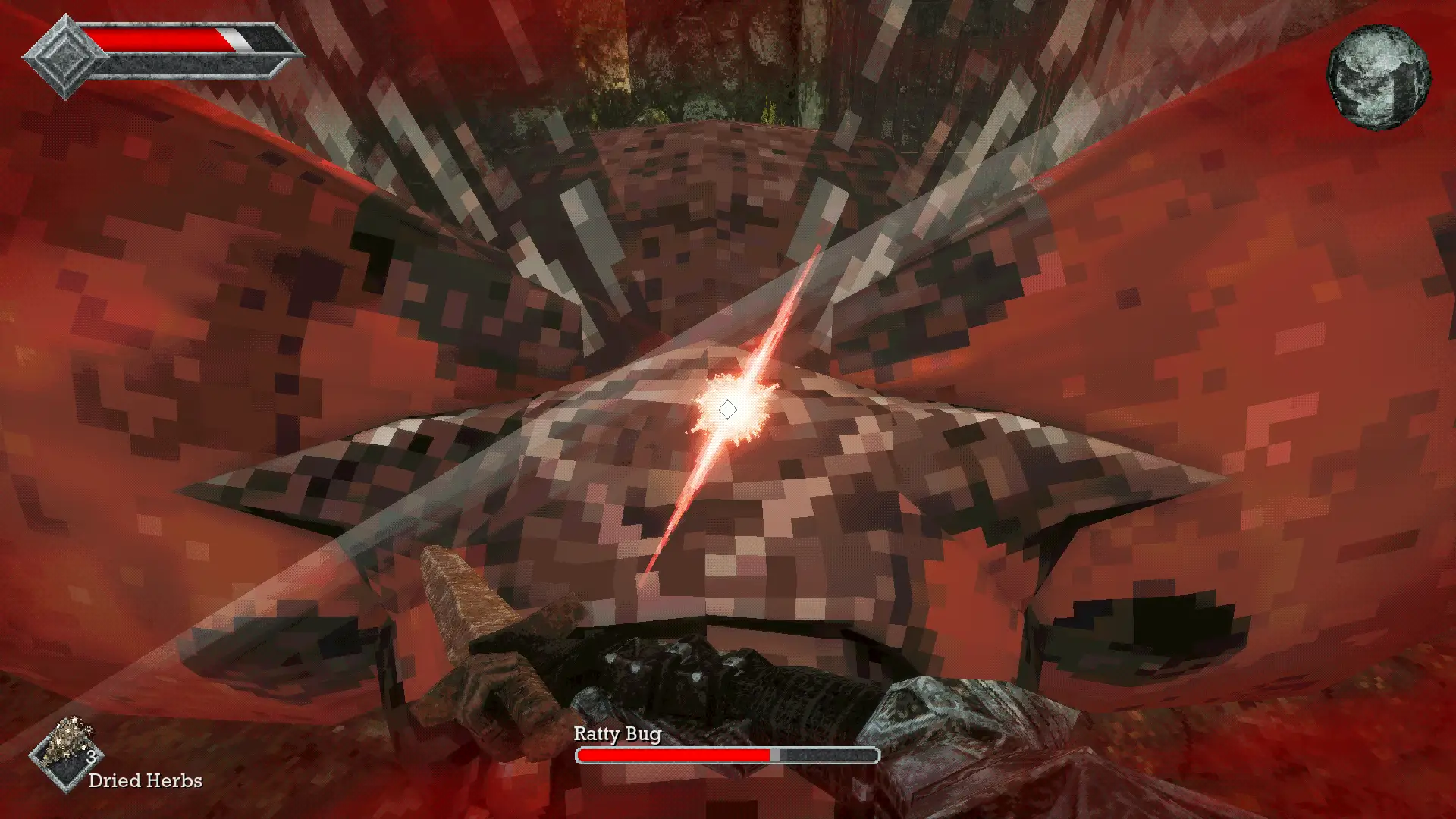
What I can say is that there’s a special sword attack that speeds up your movement, which is incredibly useful for covering ground or repositioning in difficult fights. Charged attacks land with satisfying weight. Enemies range from your standard “nasty bugs” to genuinely dangerous bosses that demand some respect for the combat system.
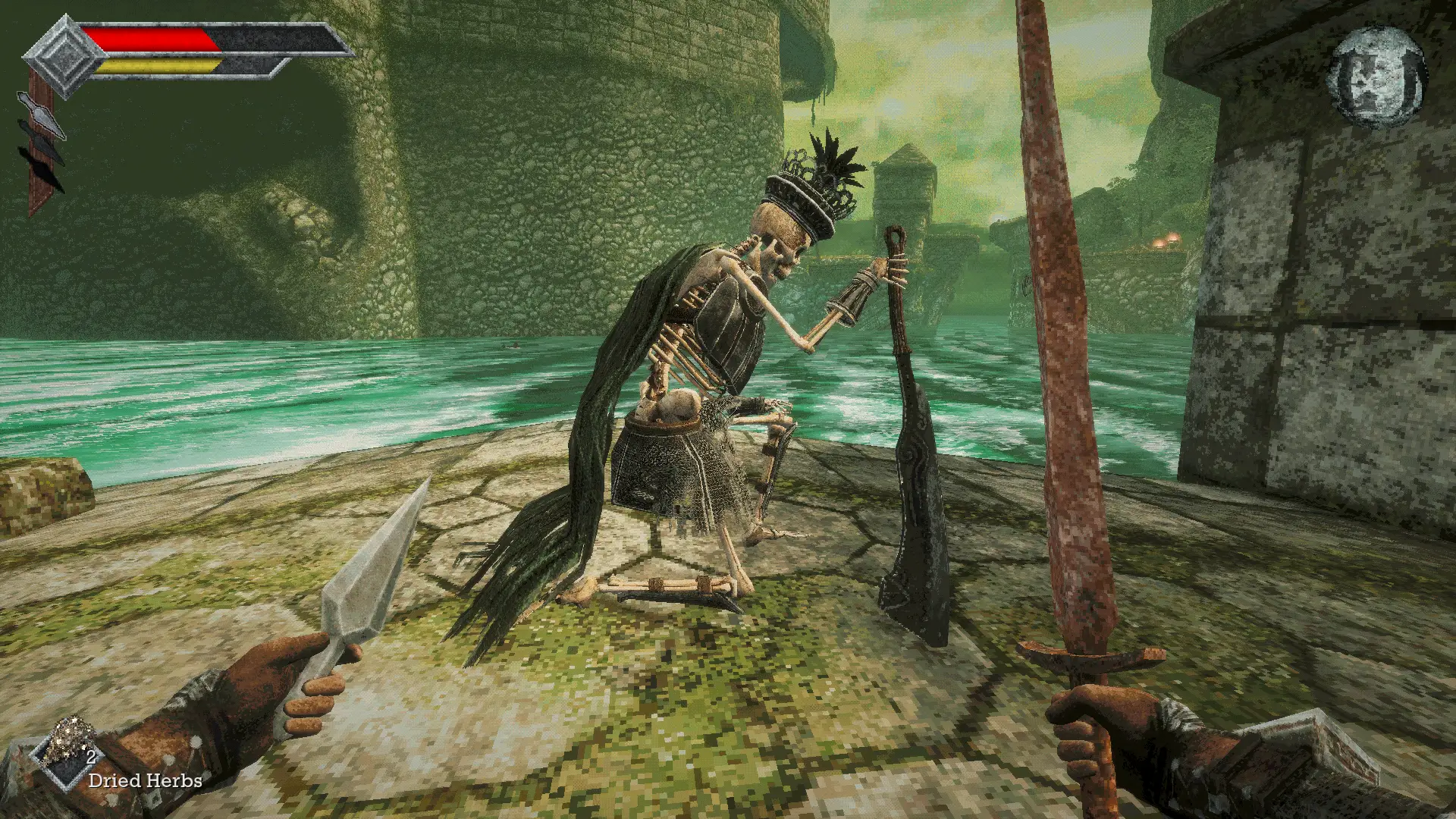
But, and it’s a big “but,” combat needs defensive options beyond strafing, meaning moving sideways, and backing away. Right now your strategy boils down to waiting for an enemy attack, stepping back or circling around, then punishing them during their recovery. Repeat until you win.
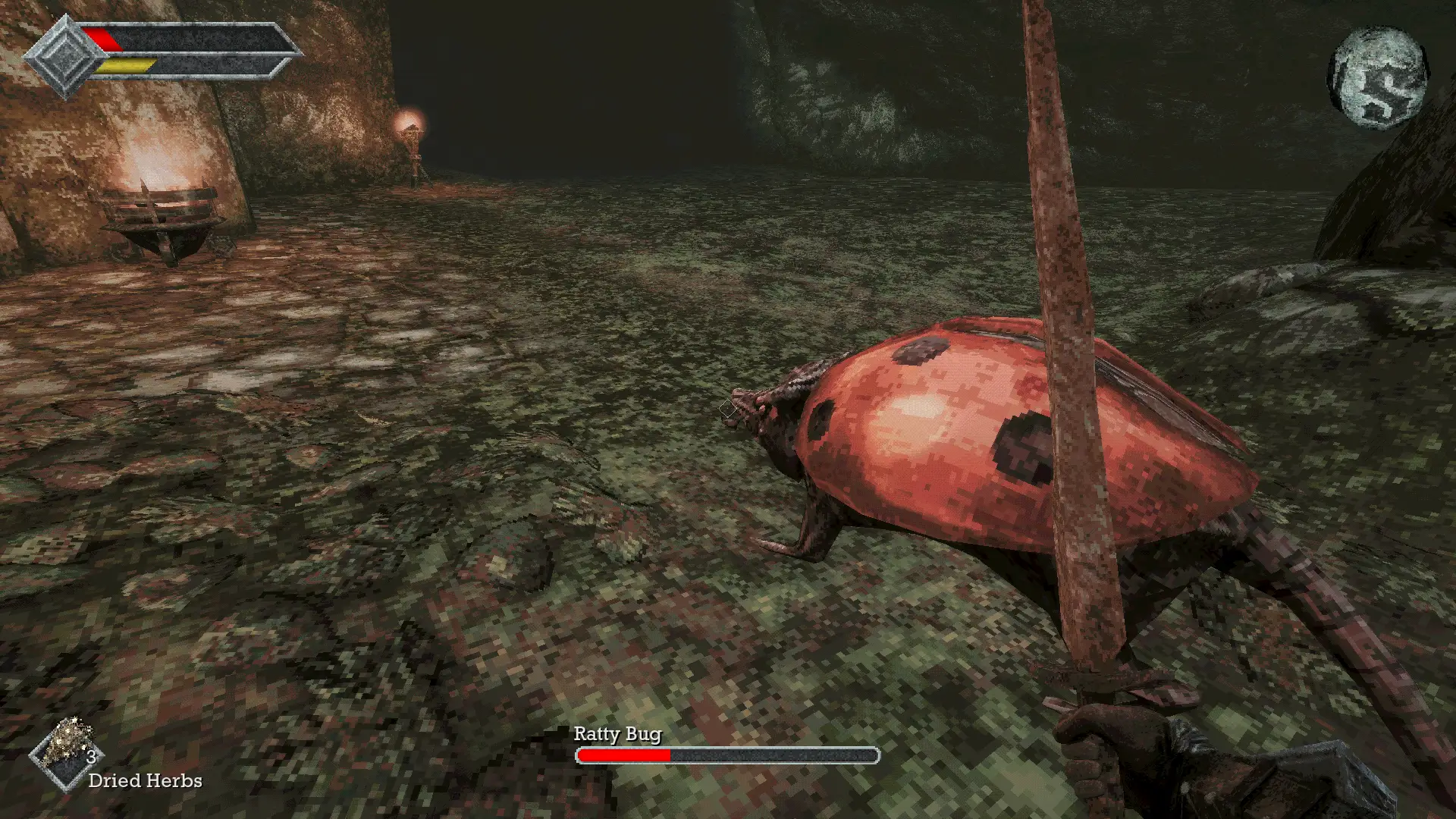
A block or parry mechanic would completely transform these fights. As it stands, you’re dancing around enemies using the same pattern again and again. It works, sure, but gets old sooner than it should. Bosses suffer especially badly: once you’ve identified the safe openings, the challenge evaporates into tedious execution. I simply circled the final boss and chipped away at its back, like fighting a troll in good old Gothic. 😀
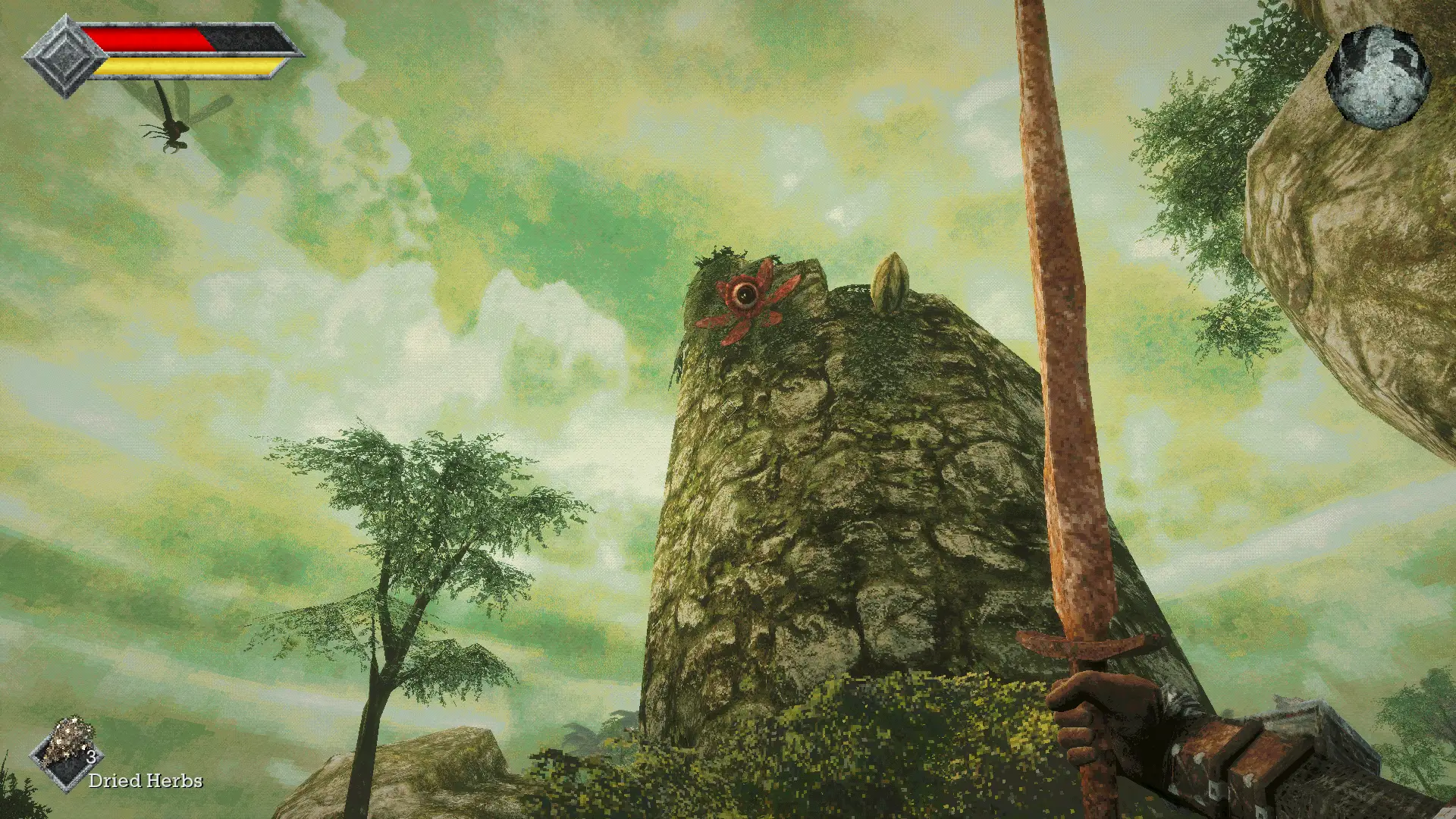
Throwing weapons add a little tactical depth, and landing a fully charged melee attack feels properly satisfying.
But damn, I kept instinctively trying to block incoming hits and getting smacked in the face for it. Maybe the full version will address that, maybe it won’t. For now, it’s my biggest complaint.
How does progression feel?
Character progression follows the familiar RPG pattern. Earn experience from kills, increase your stats, eat food for temporary boosts, and equip accessories and weapon upgrades as you find them.
It’s… simple. Maybe too simple?
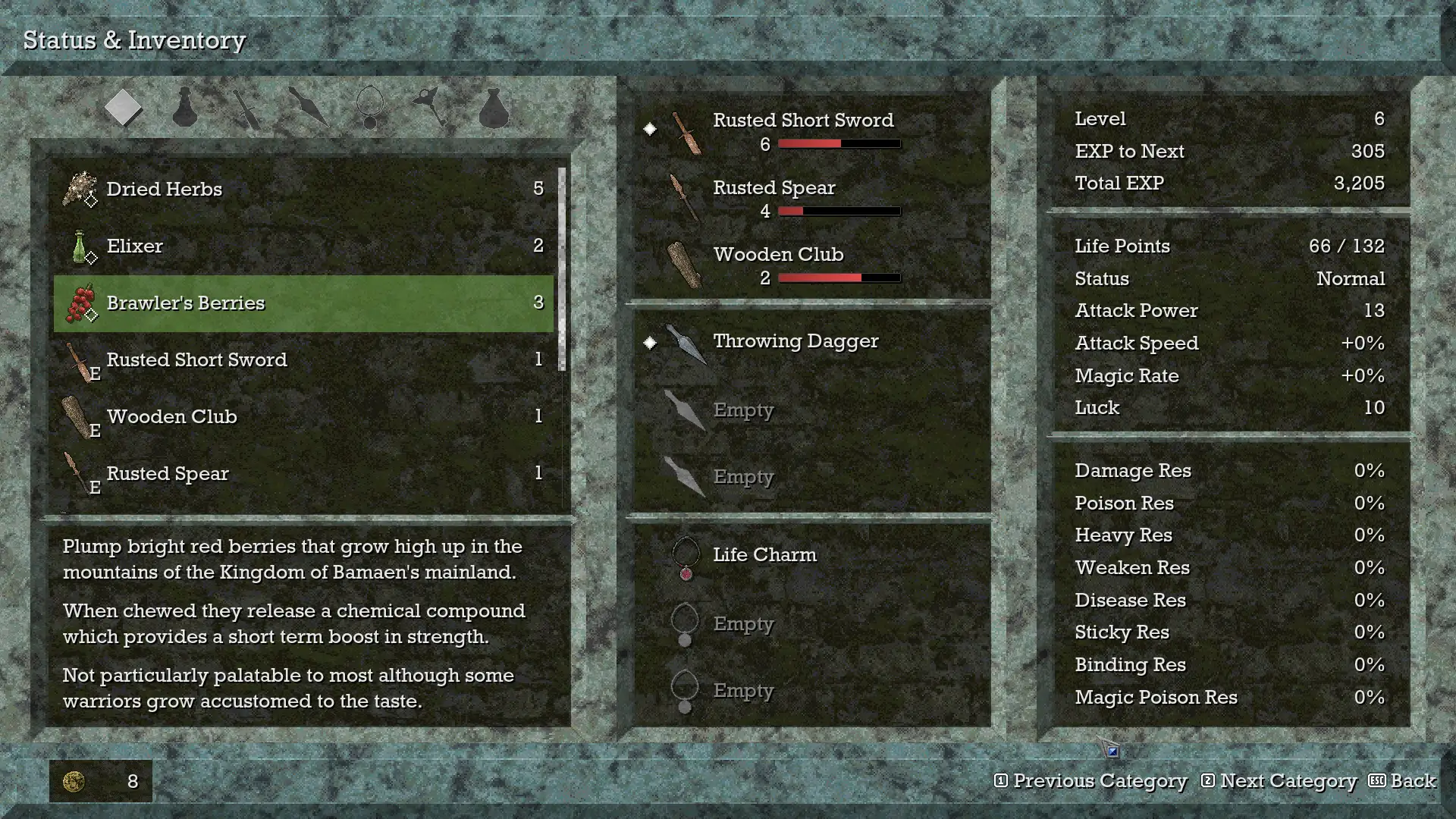
Look, I’m not asking for Path of Exile levels of complexity, but stat growth feels rather automatic. You level up, the numbers increase, and you move on. There aren’t many decisions, trade-offs, or different builds to really dig into.
Food gives you stat buffs, which is nice, and accessories offer some customization, but it all feels shallow.
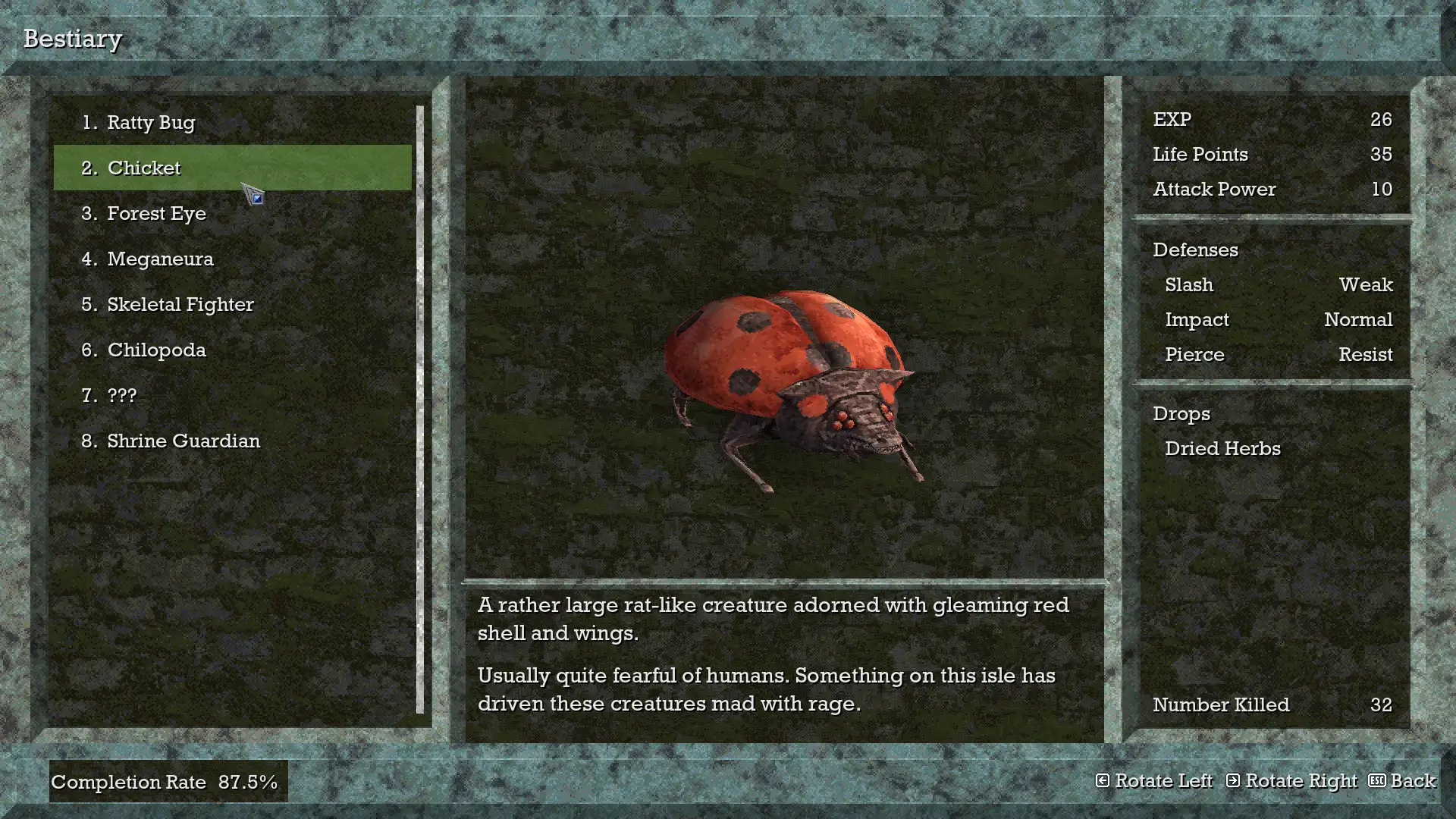
Weapon variety might make up for that. Again, more than 50 melee options with unique special moves sounds promising. But in the demo, progression didn’t grab me the way exploration did. It works. It’s functional.
Just don’t expect the build-crafting depth you’ll find in other action RPGs.
Visuals and sound
The retro fantasy presentation is Queen’s Domain’s calling card. Dark, atmospheric locations rendered in a classic low-poly style with modern lighting techniques. Pure nostalgia.
The sound design does its job: footsteps echo through caves, weapons clang with the right sense of weight, and enemies clearly signal their attacks with sound. Most of the music fits the dark fantasy tone perfectly, setting the mood without distracting from the gameplay.
But then there’s the music on the merchant’s platform… 😂
I don’t even know how to describe it, and I won’t spoil it with screenshots… It’s a strange, almost cringe-inducing experience that clashes completely with the rest of the game’s aesthetic. And you know what? I actually liked it. Sometimes a game needs that one weird detail you’ll remember long after closing it.
Queen’s Domain system requirements and performance
Queen’s Domain runs on fairly modest hardware. Here’s what you’ll need:
System requirements table:
| Component | Minimum | Recommended |
| OS | Windows 10 (64-bit) | Windows 10 (64-bit) |
| Processor (CPU) | Intel Core i5 quad-core, 2.5 GHz | Intel Core i5 quad-core, 3.5 GHz |
| Memory (RAM) | 4 GB | 6 GB |
| Graphics (GPU) | NVIDIA GTX 760 / AMD RX 560 | NVIDIA GTX 1060 / AMD RX 580 |
| DirectX | 11 | 11 |
| Storage | 1.5 GB | 1.5 GB |
The demo ran smoothly on my system, a Ryzen 5 7500F with an AMD RX 9070. The retro look means it doesn’t push modern hardware hard, but it still looks good. Steam features include cloud saves, achievements, full controller support, including Xbox controllers, and Family Sharing.
Steam Deck compatibility is still unknown, which is a shame because this feels perfect for handheld sessions. Maybe that will change before release. We’ll see.
The game supports eight interface and subtitle languages, including English, French, German, Spanish, and Japanese. A decent localization spread for an indie release.
Impressions of the demo
The demo gives you a solid 2–3 hours to decide whether Queen’s Domain is your thing. And honestly? My impressions are mixed, but lean positive.
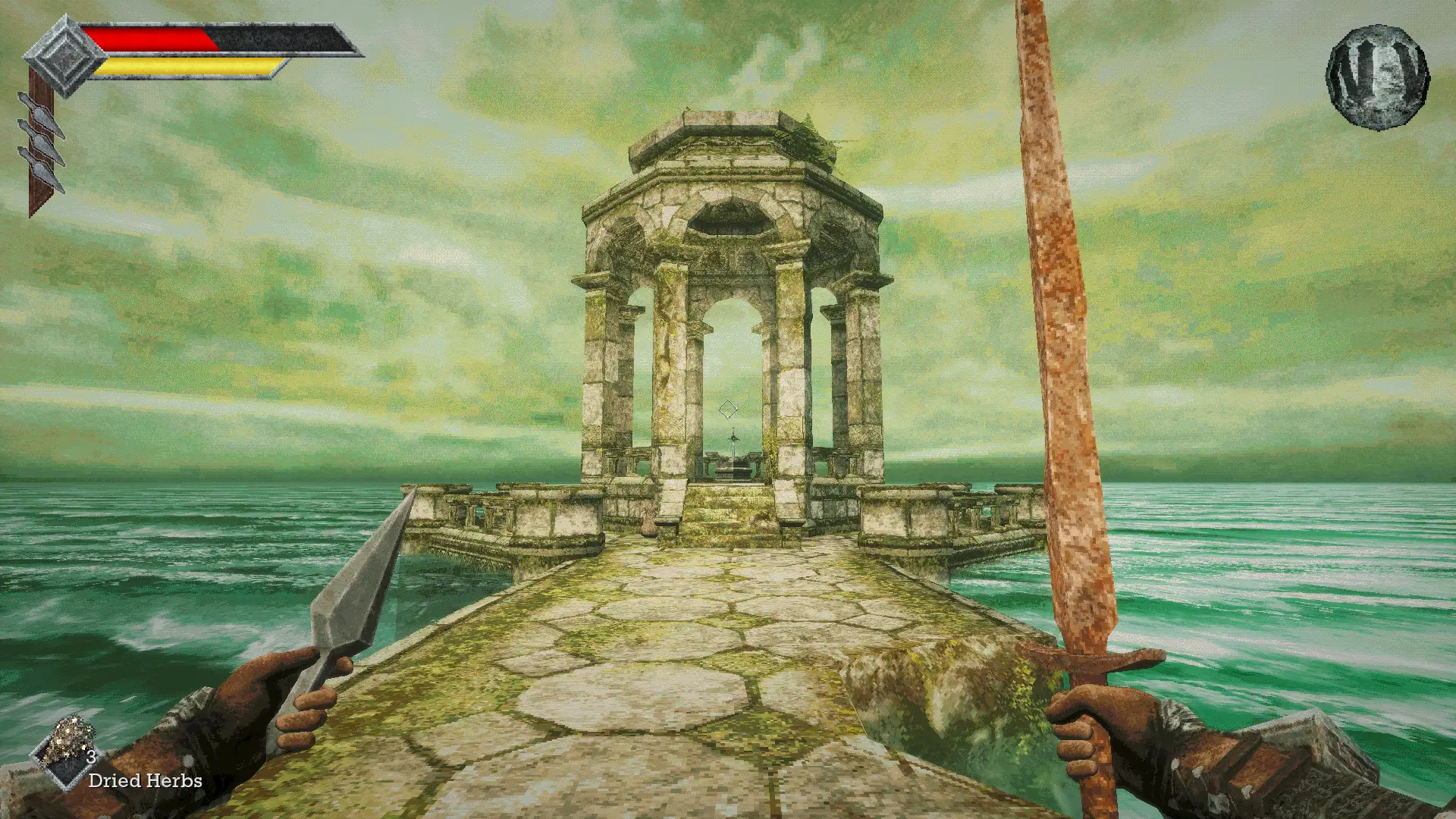
It’s clearly still a work in progress. The foundations are solid and the vision is there, but particular parts of the execution need work before launch.
Queen’s Domain’s pros and cons
Here’s a quick breakdown of Queen’s Domain’s strengths and weaknesses based on the demo:
| ✅ Pros | ❌ Cons |
| Strong dark fantasy atmosphere, my favorite, and world-building. | Combat lacks defensive options: no blocking or parrying. |
| Excellent exploration, with secrets and shortcuts. | Progression feels too simple. |
| Well-executed retro fantasy aesthetic. | The short demo limits how much you can judge its long-term appeal. |
| 50+ weapons and 100+ enemies in the full game. | Combat patterns quickly become repetitive. |
| Interconnected island design. | The depth of the content needs work. |
| Modest system requirements. | No 21:9 support, which I need for my monitor! |
| Full controller support. | Boss fights can become predictable. |
My verdict on the Queen’s Domain demo
Queen’s Domain is worth playing, and I’m looking forward to the release. I can see it being a great game for cozy evening sessions without overthinking stats and builds. Just grab a weapon you like and explore the island.
Will it revolutionize the action RPG genre? Probably not. Does it capture that specific feeling of wandering through a mysterious, dangerous place where every corner might hide something interesting? Absolutely.
Combat needs work. Seriously, add parrying or something along those lines. Progression could also use more depth, but the core loop of exploration and discovery already feels solid. If Freshly Baked Games can smooth out the rough edges and deliver the variety they’re promising, with 100+ enemies, 50+ weapons, and flight using the Holy Sword Endu, this could be a real gem for fans of King’s Field-style dungeon crawlers.
It isn’t trying to be Dark Souls. It isn’t trying to be some enormous open-world epic. It’s a focused action RPG that understands the appeal of getting lost in a well-designed maze. Sometimes that’s enough.
I’ll be keeping an eye on this one.
Questions I can answer
Can you create different playstyles with a variety of melee and ranged weapons, or does everything feel the same?
The demo's arsenal is too small to judge. The full game promises mountains of loot, and every weapon has its own special moves. That's encouraging. But without proper blocking or parrying, every “style” slips into the same routine: evade and hit. Whatever you're holding, the tactics don't change.
How does the stamina-based combat feel in practice: closer to King’s Field, Lunacid, or a modern action RPG?
It's somewhere between King’s Field and modern combat. Fights are slow and you need to watch your stamina, but the controls are responsive. You don't feel like a lumbering tank, as in older FromSoftware games. Lunacid is probably the closest comparison. Exploring the world is the main attraction; combat does its job without getting in the way.
Are leveling and stat growth satisfying, or too simple and automatic?
Honestly, too simple. You gain experience, level up, and the numbers go up on their own. No builds, skill trees, or agonizing choices here. Food and rings provide small bonuses, but there isn't much depth. It works for a relaxed playthrough, but if you enjoy digging into stats, you'll be disappointed.
Is the atmosphere closer to original PlayStation horror dungeons or more colorful retro fantasy?
It has unmistakable original PlayStation horror vibes. This isn't a cheerful retro stroll. Everything is dark, grim, and psychologically unsettling. The ruins feel ancient and the darkness is genuinely thick. It's not outright horror, but the mood comes very close to early Silent Hill.
Are there any hints about a release window yet?
There's no official date, just a “Coming soon” label. Judging by the demo's condition, though, I'd put my money on 2025. The developers haven't said anything yet. For now, your best option is to wishlist it on Steam and wait for news.