Key information
- Game: Drova – Forsaken Kin
- Platform covered: PC, Steam
- Developer / publisher: Just2D / Deck13 Spotlight
- Release: 15 October 2024; full game
- Genre: open-world action RPG, dark fantasy, pixel art
- My time in the game: 34 hours recorded on Steam
- Length: the developer estimates 40–60 hours with leisurely exploration and side content
- My verdict: 9/10
Drova – Forsaken Kin gets one thing about the first Gothic exactly right: becoming stronger should change how you feel about the world around you. Finding a teacher, getting better equipment and learning your way through the forest all matter because you start out needing that help. There is a real pleasure in gradually understanding a place that expects you to pay attention. Thirty-four hours in, that is what has won me over.
Why the Gothic comparison?
The first Gothic made getting established feel like an achievement. Someone willing to teach you a skill was useful. A better weapon was useful. Knowing where you could safely go was very useful. Drova understands the appeal of that sort of progress: you get stronger through your dealings with the world, so the people and places around you deserve your attention.
That is why the comparison means more to me than a familiar dark-fantasy setting. It is about the feeling of finding your feet in a place where you have very little standing. Christian Sandkämper, Just2D’s studio lead, described the connection in his interview with Gothic Up:
“Drova is inspired by childhood memories of playing Gothic, not the actual Gothic game itself.”
That is a useful distinction. Drova has its own visual style, its own setting and a combat system built for its top-down perspective. What it brings back is the satisfaction of gradually getting somewhere. I like earning my place in an RPG. Drova gives me plenty of reasons to care about doing it.
A world you learn by walking through it
Drova’s forests are worth looking at, and the game gives you a practical reason to do so. A carved stone, a clearing or a stretch of water can help you recognise where you are. Roots and dense foliage give the paths a shape; changes in light and colour give different places a mood. I like this visual style on its own, but it becomes more valuable when the scenery also helps you navigate.
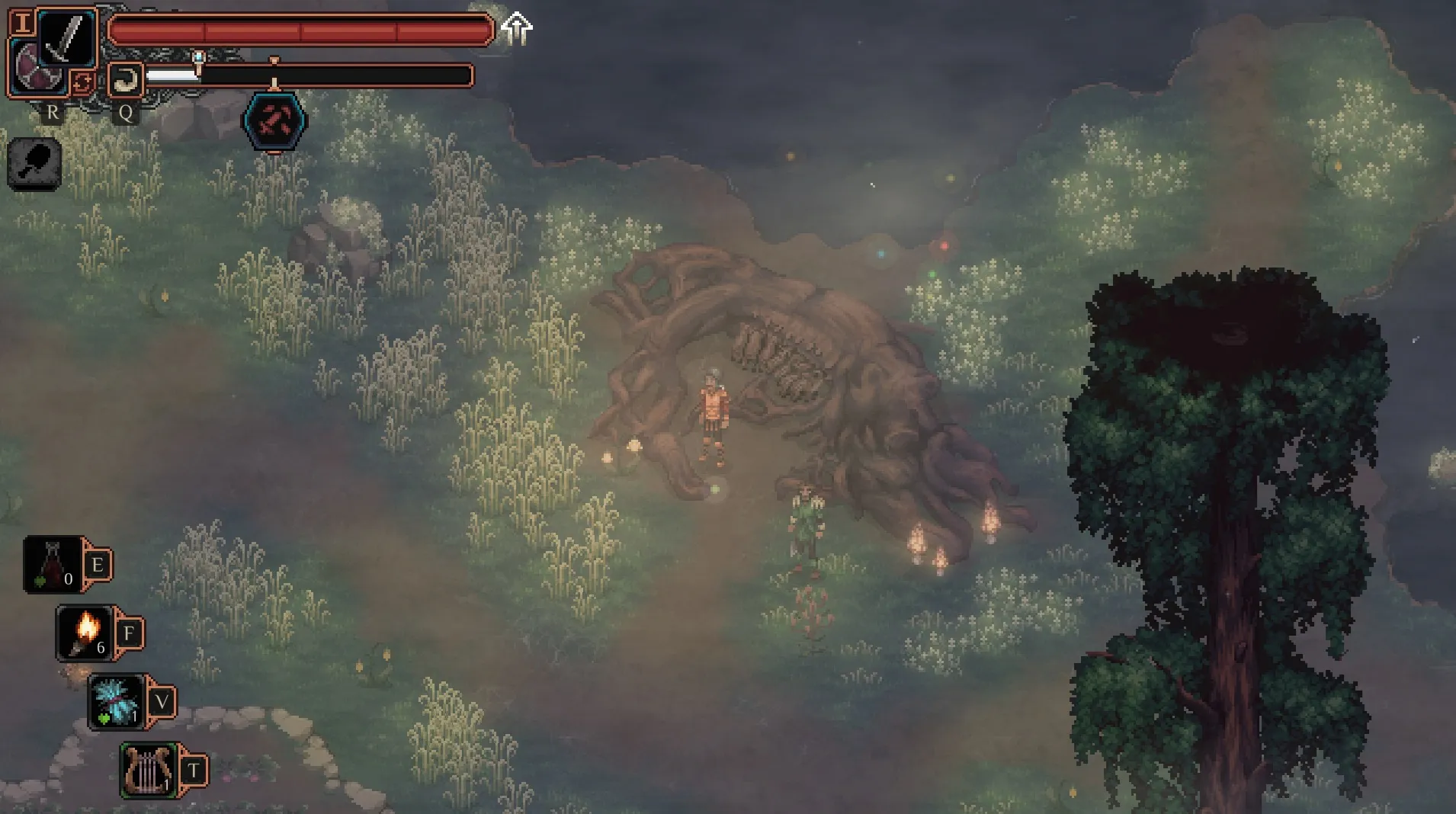
There is no quest arrow doing the exploring for you. You need to listen to directions, look at the map and remember something about the place you are trying to find. The stamps are useful here: mark a discovery and you have a reason to return without having to remember every turn. That makes travelling feel more involved. You are learning a route, rather than keeping your eyes on a marker until you arrive.
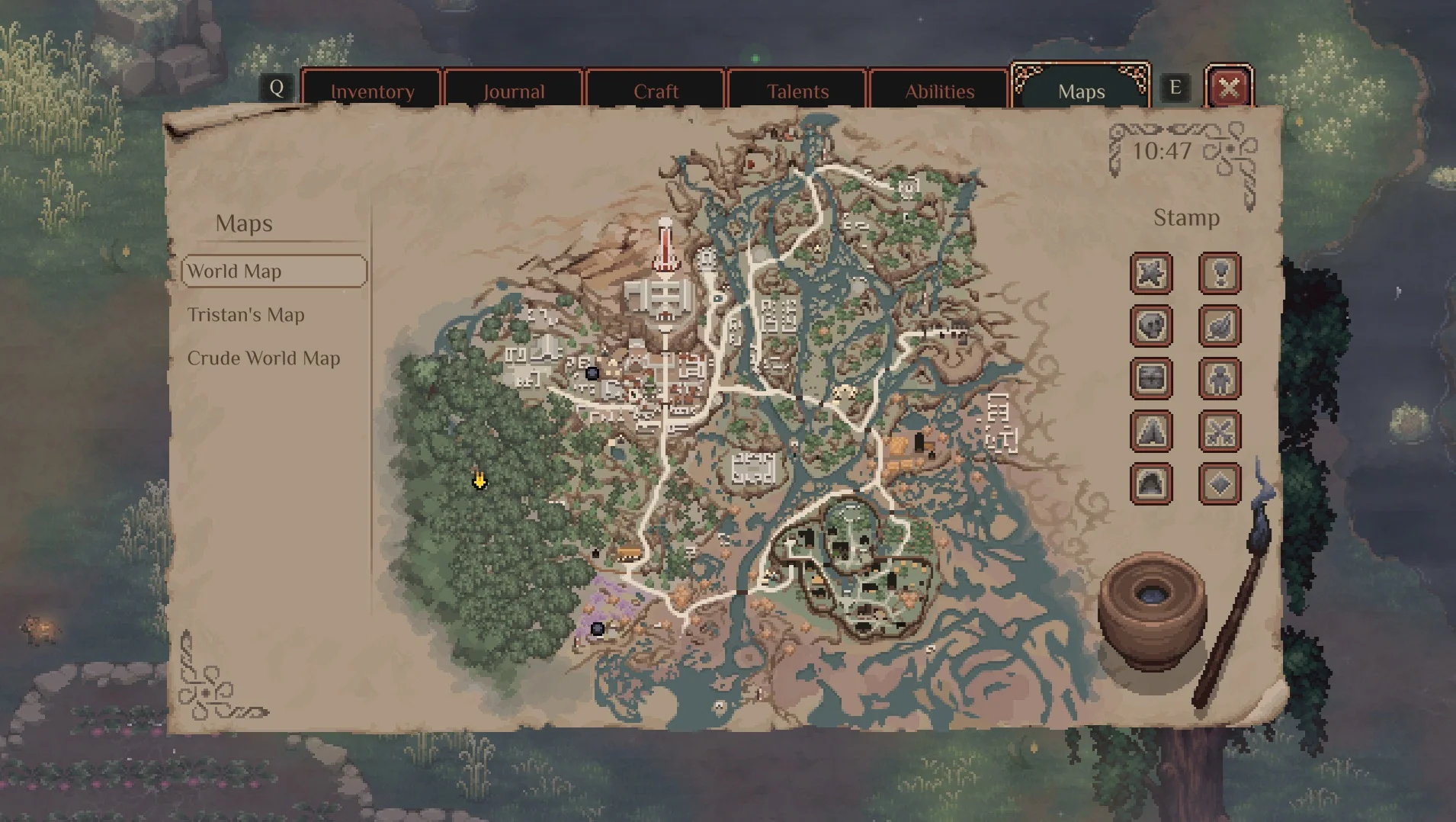
This is part of what I enjoy about Kenshi, too: knowing a place is useful in its own right. Drova gives that exploration a more defined shape through its quests and characters. There is usually a particular problem or person behind the journey, so the map gradually becomes connected to the things you have done there.
Later on, I’d welcome a faster way back
The trouble is that a route eventually stops being a discovery. Once you know where the turns go and have already looked around, another walk along the same path does less for the experience. I like having to explore on foot. I am less attached to spending the same amount of time retracing familiar ground.
I would have liked mounts to become available later in the game. Make me do the walking first, learn the map and find the interesting corners. Then let me earn a quicker way between places I already know. The timing matters: I would hate to lose the early exploration just to make the map easier to cross, but a little more convenience after that would be welcome.
Combat makes getting stronger feel worthwhile
The combat is one of Drova’s strongest parts. Positioning and timing matter, while your equipment and training still have a clear purpose. You need to watch what an enemy is doing and decide when it is worth going in. Getting stronger gives you more confidence, but there is still a fight to manage once you get there.
Stamina and Focus pull you in different directions. Blocking and dodging use Stamina, so defence takes some care. Landing hits builds Focus for your abilities; taking hits loses it, and unused Focus above your base amount fades away. That gives you a reason to push an advantage while you have it. Hiding behind a shield and waiting forever wastes an opportunity, while careless aggression risks the resource you were building. You have to make your openings count.
I like that relationship between the action and the character sheet. Training and equipment improve your chances, and learning how to handle a fight helps you use those improvements. It gives the rest of the RPG a purpose: you want a better-prepared character because you have something useful to do with one. For me, that is a much stronger reason to care about progression than watching an attack number crawl upwards.
Character development is satisfying, but three attributes feel restrictive
Drova builds its character system around Strength, Dexterity and Mind. In the screenshot below, my level-15 character has 32 Strength, 14 Dexterity and 8 Mind, with a sword and shield equipped. You can see the direction of the build at a glance. Weapon training, abilities and equipment then give you more choices around that foundation.
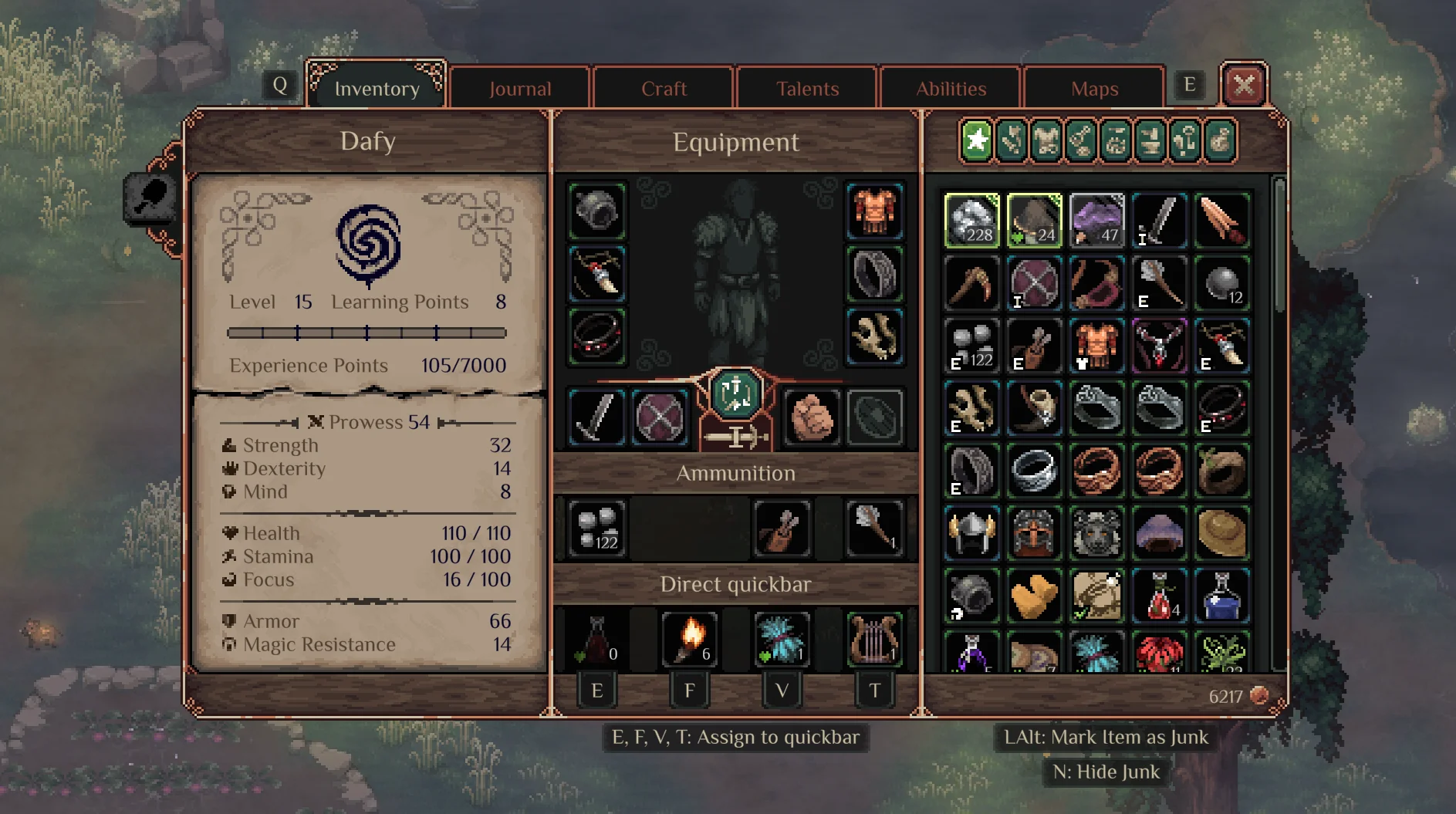
I like how readable it is. There is a clear connection between the character I am developing and the tools I want to use. My complaint is that I would have enjoyed a few more meaningful decisions at the attribute level. With only three core stats, much of the detail has to come from talents and equipment. Those parts are enjoyable; I simply wanted another layer to the character sheet itself.
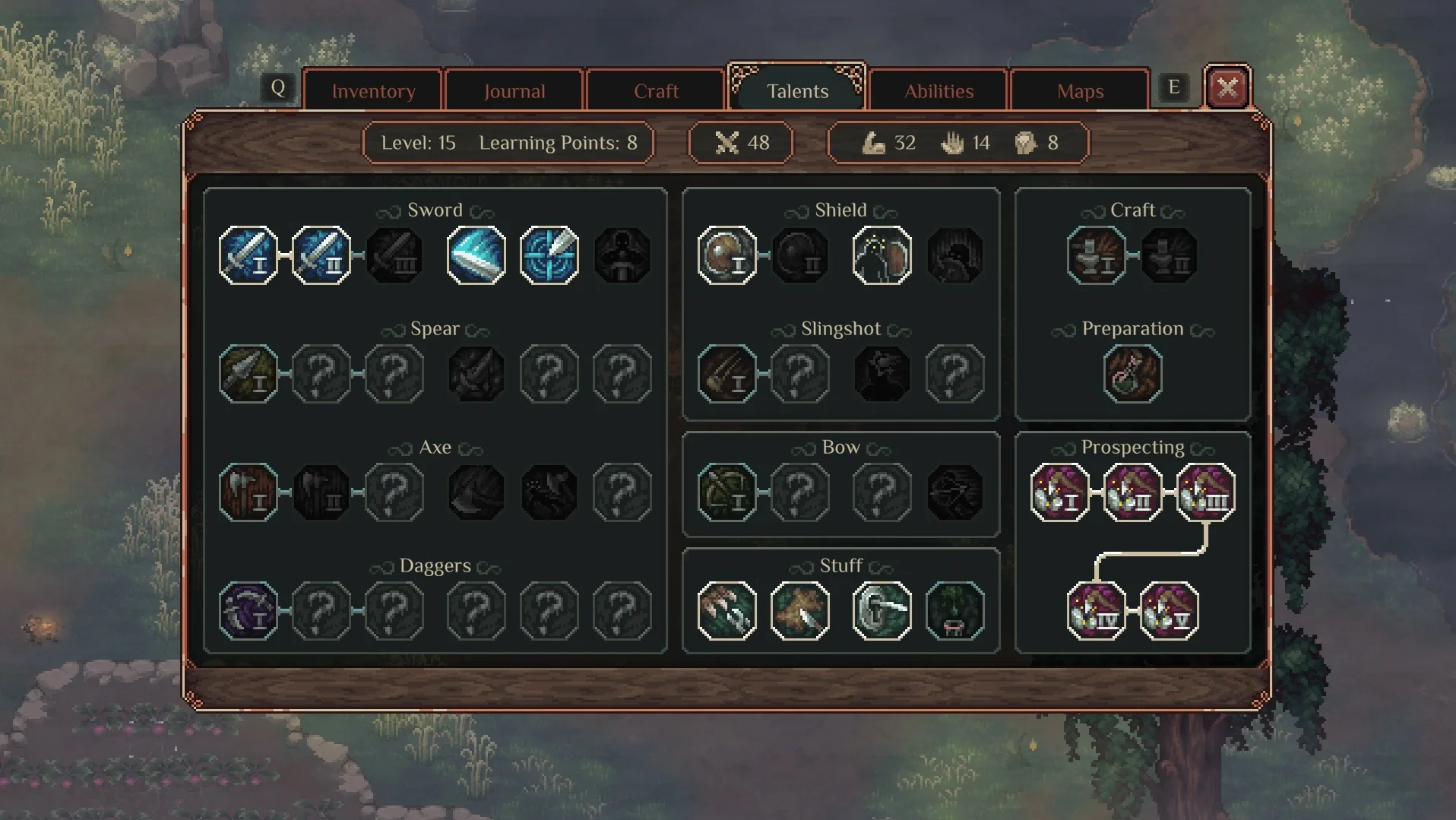
There is no need for a dozen extra numbers that barely change anything. A few more attributes with a clear purpose would do. It is the same appeal I discussed in my Gedonia review: choosing how a character develops is a large part of the fun. Drova gives me a satisfying foundation and distinct areas to invest in, from weapon training to crafting and prospecting. I would happily have spent more time making those choices.
Crafting belongs to the same process
Crafting gives the materials you collect a practical use between expeditions. The recipe screen shows what an item needs and whether a workstation is required. The Stone Arrow recipe below is a straightforward example: you can see the ingredients and the workbench requirement together, so there is no mystery about what is missing.
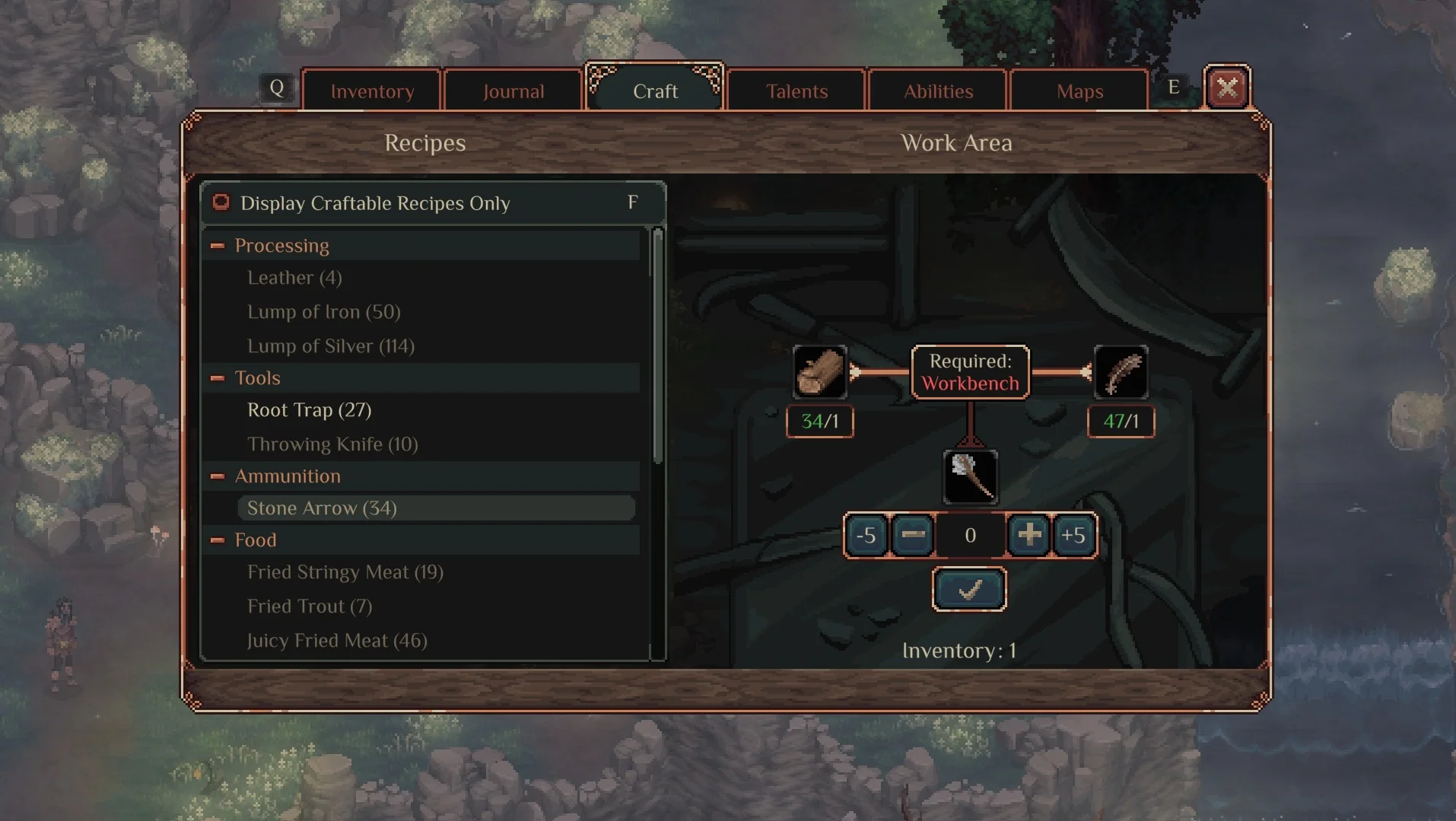
What matters is how it fits into the rest of the game. You explore, come back with materials and turn some of them into supplies for the next trip. It gives the ordinary things in your inventory a purpose. Picking up half the forest feels a little more reasonable when you can actually use what you brought home.
Characters and quests give the world a reason to exist
Drova’s larger conflict involves the power of nature’s spirits, the remains of an old empire and two factions with different ideas about what to do with that legacy. It gives the setting a reason to be divided. The people living in it are what make that conflict worth following: they have their own interests, and joining a community means dealing with more than its name on a map.
The characters and quests are a large part of why I like Drova this much. They make its slower pace worthwhile. Paying attention to a conversation can help you understand where to go or why something matters, so talking to people belongs to the exploration rather than interrupting it. The game works best when a task draws you into the place around it. One of my favourite examples involves making a talisman, a musical instrument and a group of fireflies.
My Very Own Talisman is exactly the kind of puzzle I want
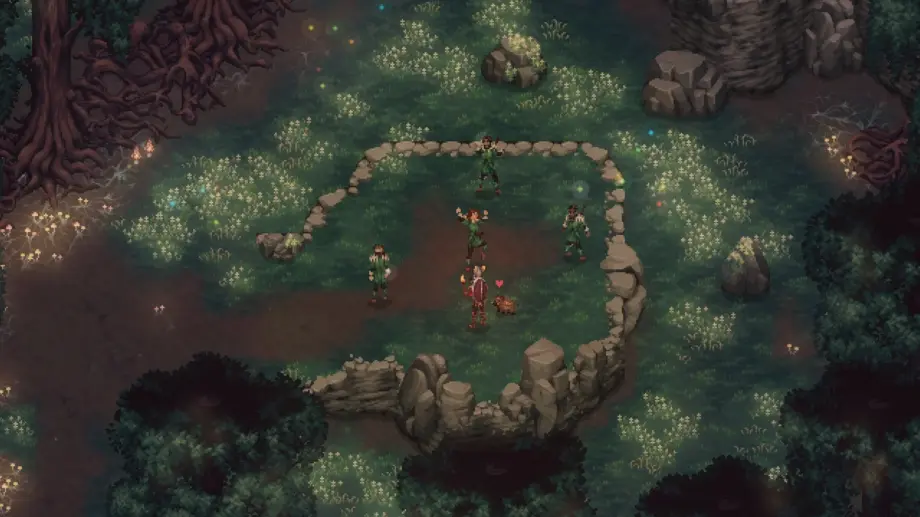
My Very Own Talisman includes a step near Nemeton’s stone circle where you use the Lyra, a playable lyre, to follow a pattern given by the fireflies. It is a lovely idea. The surroundings provide the clue, and an item in your hands gives you a way to respond to it.
I like that the puzzle asks you to notice something and then try it for yourself. You have to understand what the lights are showing you, but the connection between the clue and your action makes sense. That moment of recognition is enough. It does not need an elaborate sequence of unrelated objects to make you feel as though you have solved something.
That is the balance I enjoyed in Drova’s puzzles: creative enough to be memorable, clear enough to work out. The musical step is the part of the talisman quest I want to highlight here, rather than giving away the whole chain. Details like this make me want to keep looking around: the next odd little scene might be asking for something too.
Steam achievements: Last One Standing is the standout
My Steam achievement page puts the playthrough at 15 of 52 achievements unlocked, with one marked as rare. There is still plenty left on that list after 34 hours. The one worth a closer look is Last One Standing.
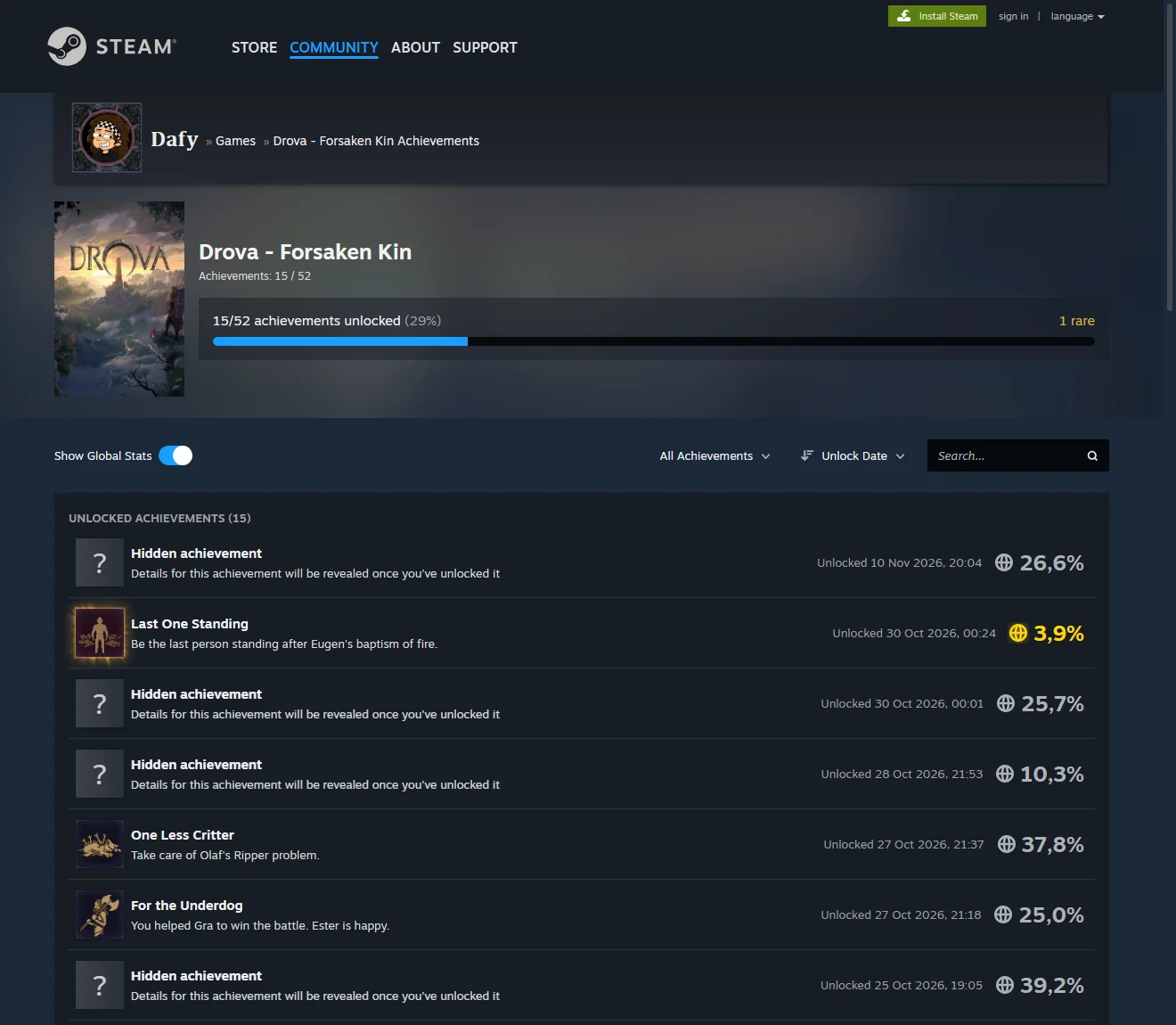
Last One Standing requires you to be the last person standing after Eugen’s baptism of fire.
It also fits what I like about Drova’s combat. The achievement belongs to a specific trial involving a character in the world, so there is more to it than reaching an arbitrary kill count. A game that puts this much emphasis on learning to handle yourself should have a milestone called Last One Standing. Fair enough, Drova.
Pixel art with atmosphere, and sound I’d like more of
The visual style is a major reason Drova works for me. The forest scenes have enough detail to make you look closely: tangled roots, carved stone, little patches of light on the ground. Then the palette changes and the trees and water take on a different character. The purple-lit area below is a good example. It gives a stretch of woodland a distinctive mood without needing a dramatic cutscene to announce it.
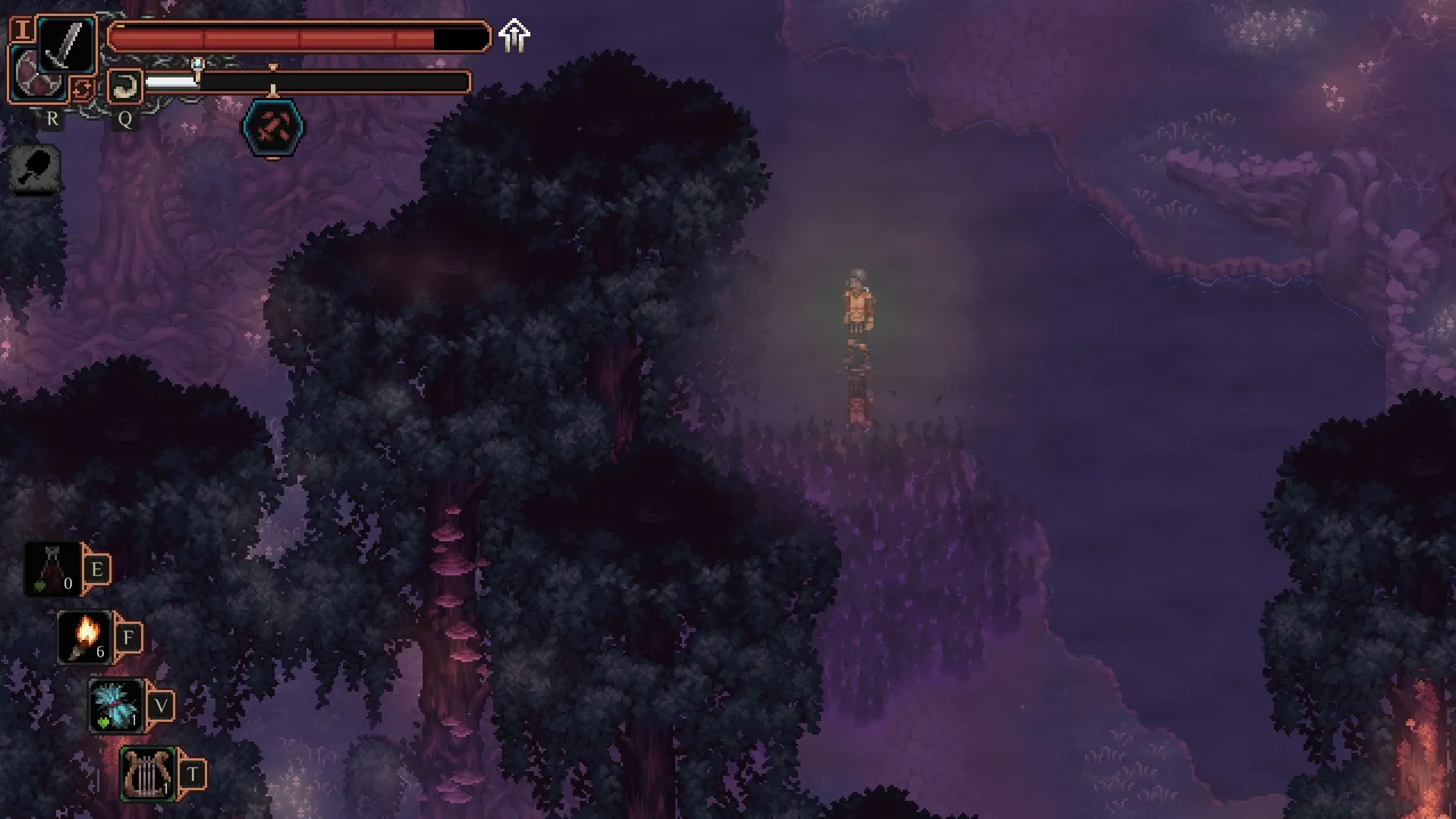
I wanted more variety in the voice work. The characters and conversations are good enough to make me care about the people, and a broader range of vocal performances would give them more individual presence. It is one of the places where I kept wanting a little more from an otherwise very appealing world. When so much of the adventure depends on listening to people, the way they sound deserves that attention too.
PC requirements
The minimum requirements on Drova’s Steam page are modest:
- a 2 GHz dual-core processor
- 2 GB of RAM, integrated graphics
- around 4.03 GB of storage.
My verdict: 9/10, with a few things I’d still change
So, is Drova worth playing? For me, absolutely. The appeal goes well beyond recognising a few ideas from Gothic. Exploration makes you learn the world, character development gives you useful goals, and the combat makes the effort of getting stronger worthwhile. The people and quests give those systems something worth spending time on. That is a very good foundation for an RPG.
I would still welcome more depth in the core attributes, more varied voice work and mounts earned late enough to preserve the early journeys on foot. Those are the things holding it back from being quite the game I would ideally want. They matter, but so do the hours in which I am enjoying the combat, looking around the forests or working out what a quest is asking me to notice.
My score is 9/10. If the first Gothic still represents something you miss in RPGs, Drova is an easy recommendation. Come prepared to pay attention, find your own way and put some time into your character. If that already sounds like work, its slower stretches may wear you down. For me, this is the sort of adventure that makes the effort worth it.
You can find Drova on Steam and visit the official Just2D website for more from its developers.