The 90s became the golden age of role-playing games. It was an era when developers really trusted players to figure things out on their own, when games had real depth instead of guiding you by the hand through every quest marker. Classic RPGs from the 90s are the foundation of everything modern games try (and often fail) to recreate.
This list brings together the real heavyweights: the post-apocalyptic wasteland of Fallout, tactical party battles in Baldur’s Gate, and the addictive grinding in Diablo. We’ll break down what made these games defining for the genre and why they still play amazingly even decades later.
Fallout
🖥️ Available on: PC, Mac
⏳ Playtime: 16 hours (main story), 23 hours (with additional content)
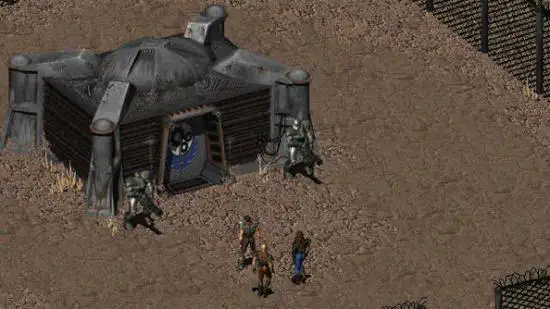
Imagine yourself as an Outlander from the Vault, stepping onto the wastelands of California, where radiation has turned everything into an utter nightmare. Your mission? Find the water chip before your underground home dies of thirst.
In 1997, Fallout rewrote all the rules: it wasn’t about saving the world with predictable heroics. It was about surviving through decisions that actually mattered, where diplomacy could end conflicts as easily as a bullet.
gameplay revolves around isometric turn-based combat with mechanics inspired by GURPS. Every point you spend in skills changes the way you approach problems. High speech skill? Talk the guards’ ears off. High lockpicking skill? Sneak through alternative paths.
The whole plot revolves around searching for the water chip, but how you handle it—and whether you even care about your Vault afterwards—depends entirely on you.
| ✅ Pros | ❌ Cons |
| Dialogue options that change the quest | Time limits create unnecessary pressure for new players |
| Dark humor that never gets old | Companion AI can be frustratingly dumb |
| Many ways to solve each problem | Classic interface, overloaded by modern standards |
| Atmospheric post-apocalyptic wasteland | Some quests lack clear directions |
| High replayability thanks to different builds | Combat pace can feel too slow |
Why should you play Fallout 1?
You'll appreciate the classic Fallout if you're tired of modern RPGs that are too polished and polished, too controlling and limiting your freedom. Want to join the bad guys? Go ahead. Want to accidentally ruin a settlement? That'll be on your conscience, but it’s possible too 😊.
Baldur’s Gate
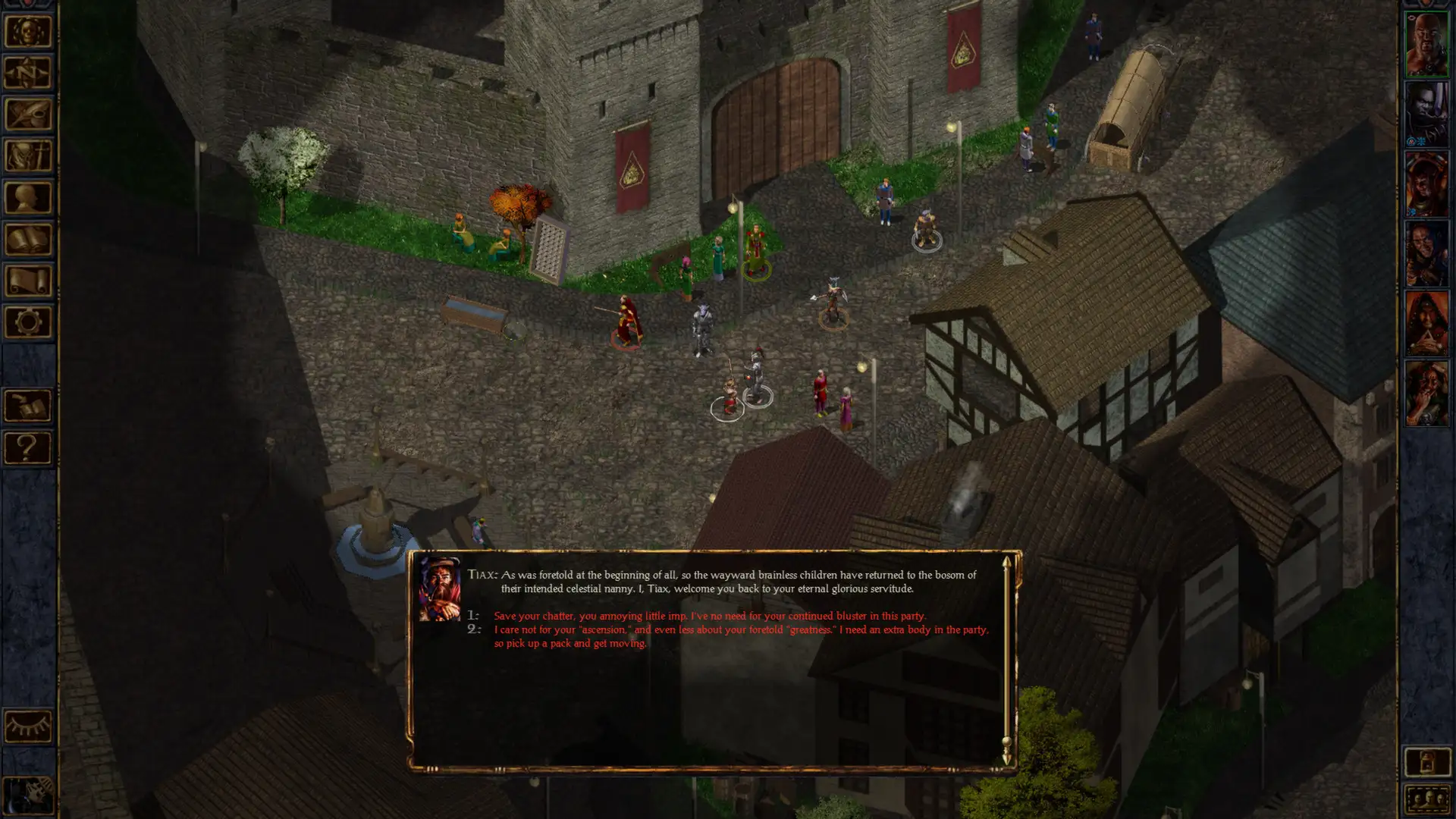
🖥️ Available on: PC, Mac, Linux, PlayStation 4, Xbox One, Nintendo Switch, iOS, Android
⏳ Playtime: 40 hours (main story), 60 hours (with additional content)
BioWare's 1998 masterpiece brought Dungeons & Dragons to life in a way tabletop players could only dream of. You create a character on the Sword Coast, uncover the secrets of your heritage, and manage a group of memorable (and often bickering) companions.
The RPG system is based on AD&D rules, transferred into real-time combat with active pause, and Baldur’s Gate ultimately set the template that every party-based RPG still follows.
The Saga of Bhaalspawn forms the backbone of the whole story: you are the child of a dead god, and all sorts of factions either want to use you for their purposes or simply take you out.
The fights here require smart planning. You won’t win by simply spamming spells at enemies — positioning is important, spell choice is critical, and you absolutely need to know when to hit pause and reassess the situation.
| ✅ Pros | ❌ Cons |
| Interesting tactical battles | Some side quests feel like pointless filler |
| Rich interactions and squabbles between companions | The old pathfinding AI is a constant headache |
| Huge world with tons of side content | Difficulty spikes in fights really hit newcomers hard |
| Mod support with an active community | Character creation can overwhelm beginners |
| The Enhanced Edition fixes a lot of the original bugs | Low-level D&D can feel brutally random |
Is BG the game that's right for you?
This game will instantly click with you if you're the kind of person who really enjoys reading spell descriptions and carefully picking your party. It's made for D&D fans who want an exact, not a casual, adaptation of their favorite tabletop rules. If you've ever argued passionately about the THAC0 mechanic around a game table, this is where you'll feel right at home.
Diablo
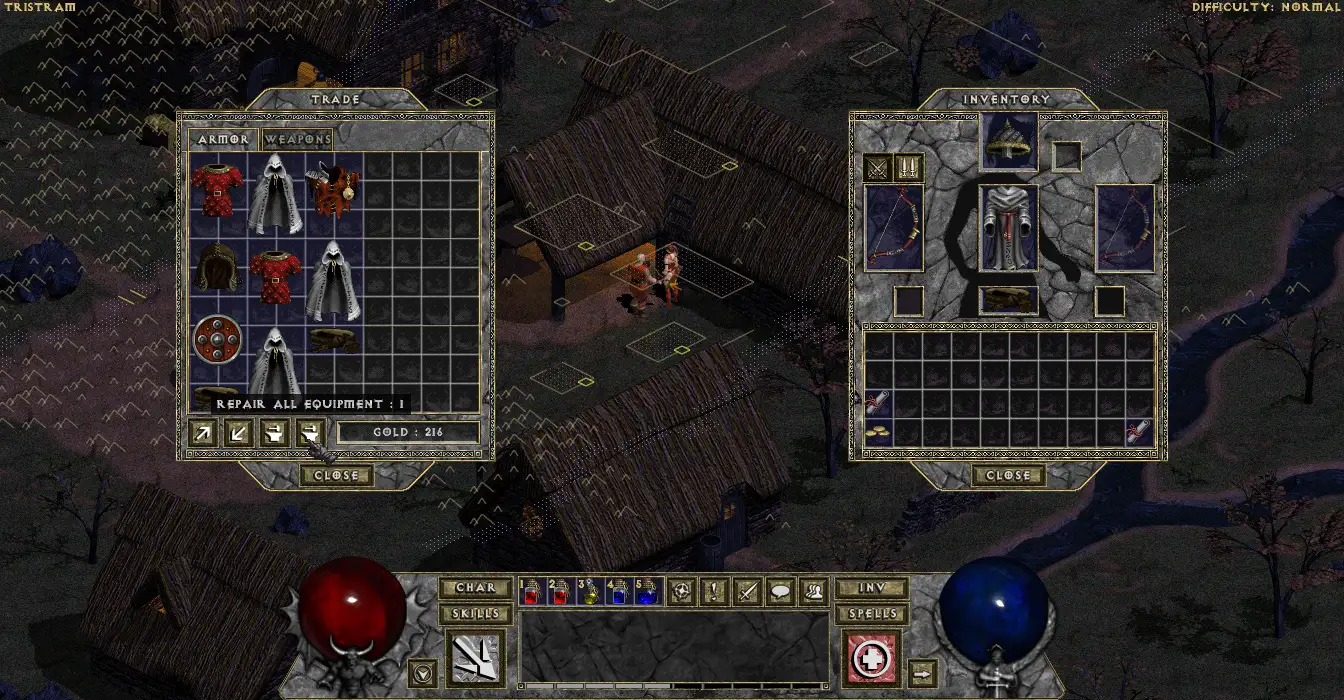
🖥️ Available on: PC (Windows, macOS)
⏳ Playtime: 15 hours (main story), 30 hours (with extra content)
In 1996, the guys at Blizzard North created something truly unique: a gothic horror action-RPG where endlessly clicking demons for loot just never gets old. Your task is to defend the town of Tristram from hellish creatures emerging from the local cathedral.
Here's what awaits you sixteen procedurally generated dungeon levels packed to the brim with monsters, deadly traps, and that sweet, randomized loot.
Three available classes offer totally different playstyles: the warrior tanks head-on, the rogue dazzles with pinpoint ranged attacks, and the mage wreaks total havoc with spells.
The story tells about the Prime Evil, unfolding as you descend deeper into darkness, watching how Diablo's corrupting influence distorts everything around you.
| ✅ Pros | ❌ Cons |
| Insanely addictive gameplay that revolves around looting gear | Combat clearly lacks depth compared to the sequels |
| Dark atmosphere that still gives you chills | Only three character classes to choose from |
| Simple controls let you dive into the game instantly | Linear main storyline with minimal side activities |
| Co-op with friends greatly boosts replayability | Difficulty balance sometimes seems completely off |
| Legendary and recognizable soundtrack by Matt Uelmen | Limited options for customizing your hero |
Can Diablo quench your thirst for endless loot?
You'll definitely fall in love with this game if you get a kick out of the rhythmic cycle of 'kill, loot, level up.' It's a pure, uncut action-RPG with zero pretension. Every modern ARPG, the so-called Diablo-likes, owe their existence to the Diablo formula, but the original still plays great if you appreciate core gameplay focused on dungeon crawling. If you like the ideas but struggle with the original presentation, these RPG remakes and remasters offer a route into revisiting older designs.
The Elder Scrolls II: Daggerfall
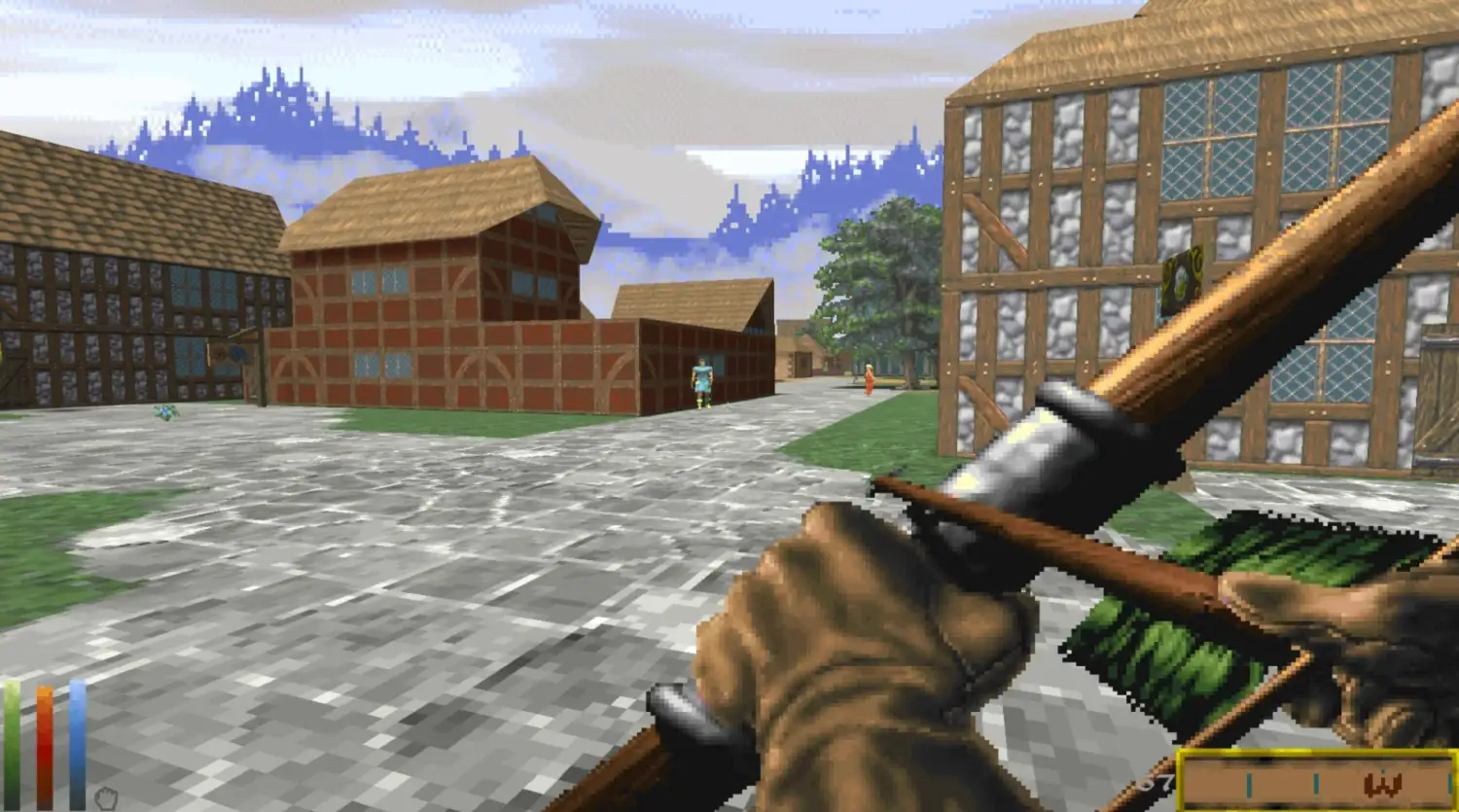
🖥️ Available on: PC (Windows, DOS)
⏳ Playtime: 32 hours (main story), 90+ hours (with additional content)
In 1996, Bethesda cranked the scale up to the absolute max. We're talking about a game world bigger than the UK. Yeah, it's procedurally generated, but the sheer ambition of the developers was just mind-blowing.
You are set to investigate the death of King Daggerfall, finding yourself caught between the gears of political factions, ancient forces, and your own decisions about who exactly deserves to take power.
First-person world exploration here intersects with incredibly complex character customization. The quest to find the Mantella spins the wheel of political intrigue, but joining guilds, buying property, and crafting your own spells can pull you in for endless hours.
The Daggerfall Unity project perfectly modernizes the game, bringing bug fixes, quality-of-life improvements, and mod support, making it absolutely comfortable to play even today 😉.
| ✅ Pros | ❌ Cons |
| Unprecedented level of freedom and colossal scale | The original version of the game was just packed with critical bugs |
| Deep character creation system and spell crafting | Procedurally generated dungeons get boring quickly |
| The fan-made Daggerfall Unity port fixes the main issues of outdated graphics | Extremely high entry barrier for newcomers |
| Joining factions makes each playthrough truly unique | Navigating the world can cause genuine pain and confusion |
| The game is completely free on GOG | The combat system critically lacks tactical depth |
Is it worth playing Daggerfall?
This game will appeal to hardcore players who don't need to be led by the hand through the storyline. If even Morrowind seemed too casual for you, Daggerfall will throw pure old-school hardcore at you. It's made for people who enjoy digging into complex mechanics more than watching pretty special effects and appreciate when a game trusts them to figure everything out on their own.
Planescape: Torment
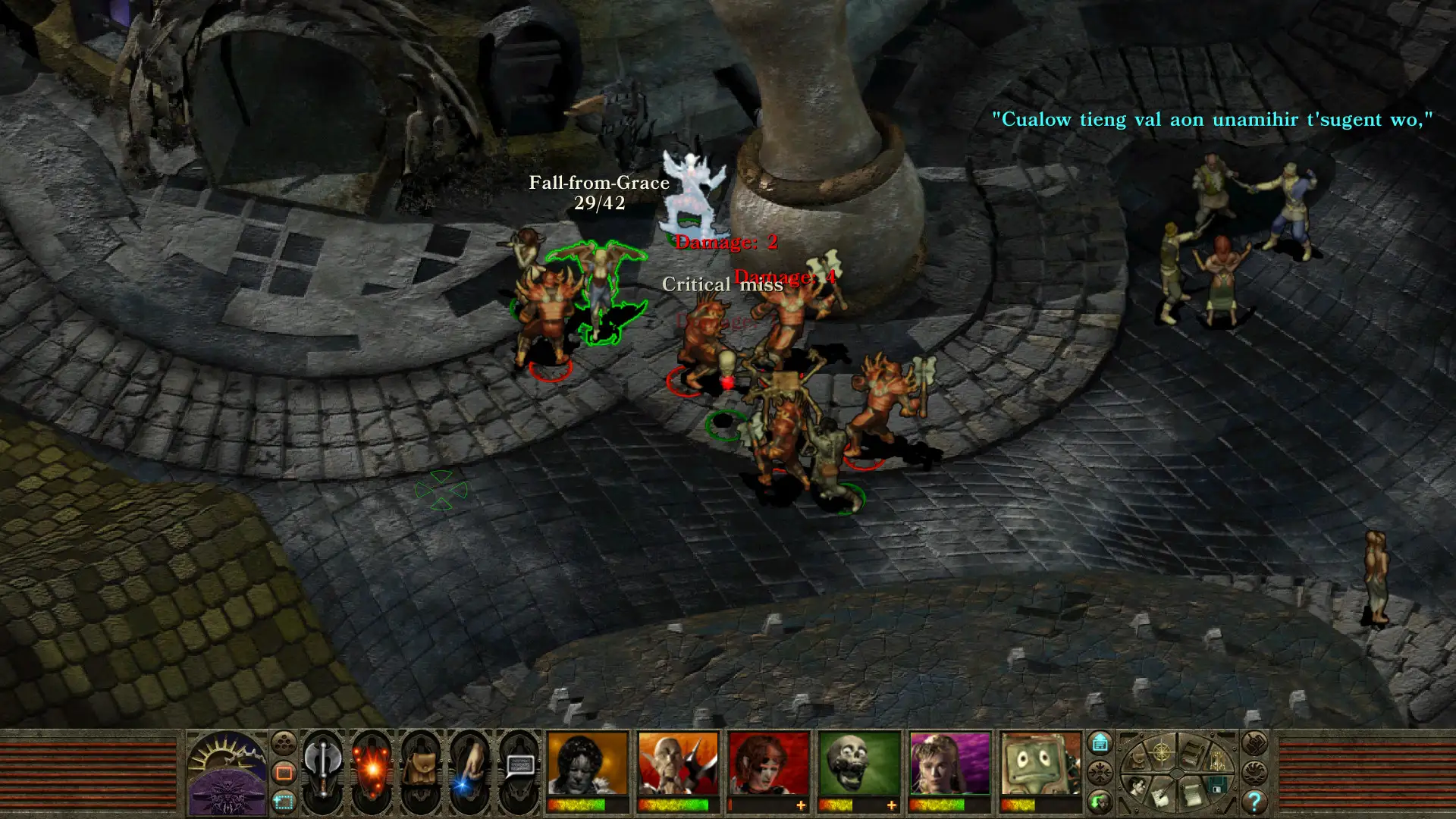
🖥️ Available on: PC (Windows, macOS, Linux), PlayStation 4, Xbox One, Nintendo Switch, iOS, Android
⏳ Playtime: 33 hours (main story), 45 hours (with extra content)
In 1999, developers from Black Isle Studios asked themselves a pretty risky question: what if they made an RPG where the focus was on the story rather than combat? You take on the role of the Nameless One, an immortal guy with amnesia, whose body is covered in scars and tattoos, each serving as a clue to past lives you've completely forgotten.
The metaphysical city of Sigil becomes both your prison and a blank canvas while you try to find the answer to the biggest question: what can change the nature of a person?
There are battles here, of course, but they feel like something really secondary. This game is about powerful dialogues, philosophical dilemmas, and companions, each going through their own personal existential crisis.
The Shadow of the Lady of Pain hangs invisibly over the entire city, an unknowable entity that enforces neutrality in Sigil through its absolute power. Your choices in the game change not only the direction of the story, but also your very perception of yourself.
| ✅ Pros | ❌ Cons |
| One of the best RPG stories ever, there's really no argument here | Combat feels clunky, boring, and unfinished |
| The uniquely unparalleled Planescape setting | To get the most out of the game, you'll need to level up Wisdom and Intelligence |
| Deep philosophical themes and tough moral choices | The slow narrative pace will put off action fans |
| Incredibly colorful companions with well-developed backstories | The outdated interface can really frustrate a modern gamer |
| Multiple endings | Huge amounts of text: you'll have to read a lot and constantly |
Will Planescape: Torment grab you?
This game will require a ton of patience. If you value narrative depth more than fast-paced action, and if you're ready to read thousands of lines of text just to understand a character's motives, Planescape: Torment will give you an experience that no other RPG has been able to replicate. It's a masterpiece for those who truly believe that video games can and should be real art.
Icewind Dale
🖥️ Available on: PC (Windows, macOS, Linux), PlayStation 4, Xbox One, Nintendo Switch, iOS, Android
⏳ Playtime: 30 hours (main story), 45 hours (with additional content)
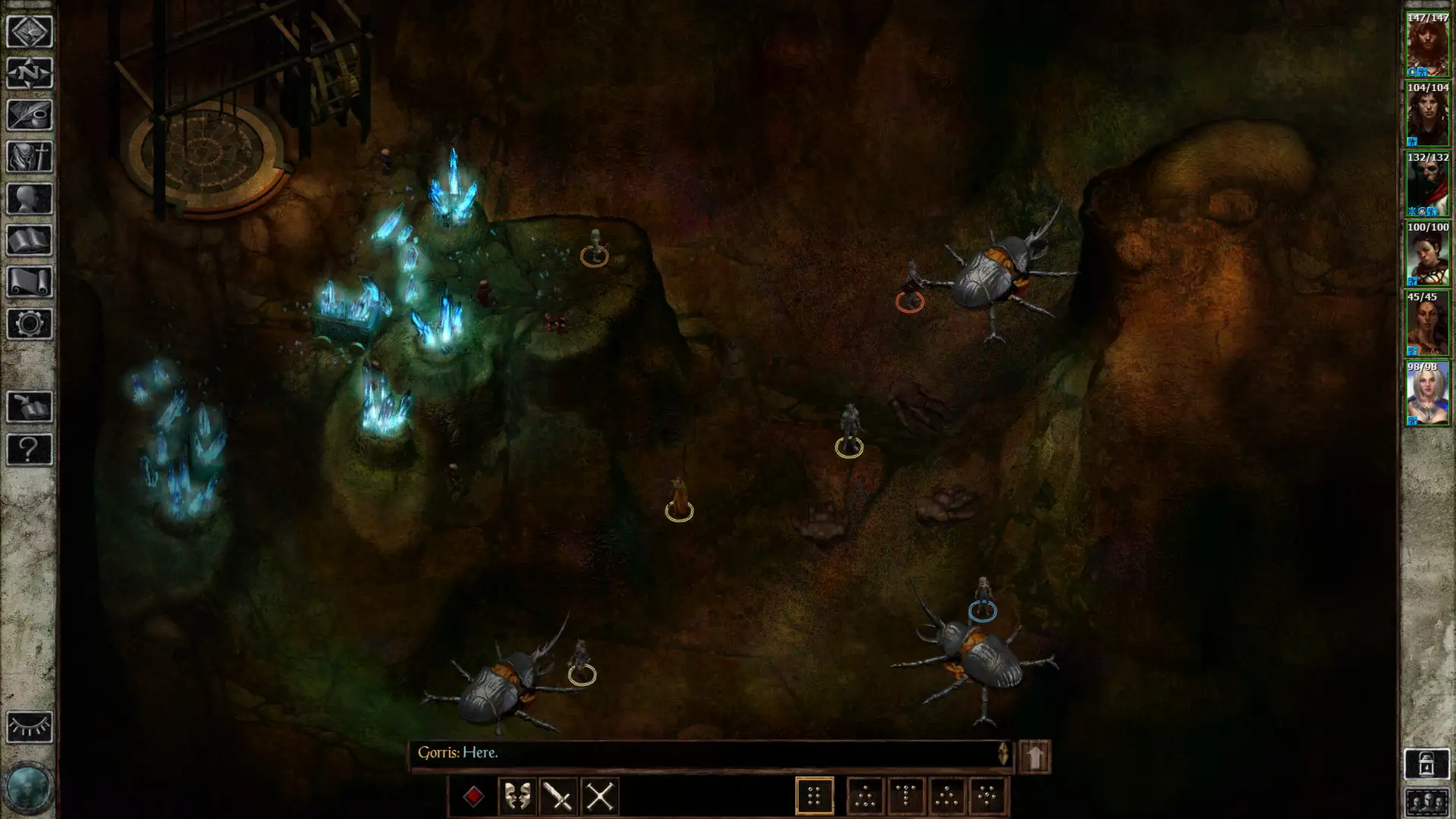
The guys at Black Isle took the engine from Baldur’s Gate and asked themselves: 'What if we forget everything else and focus purely on combat?' The result was a party-based RPG centered around intense dungeon-clearing in the icy northern settings of the D&D universe.
You create a squad of six fighters from scratch and fight your way through the Ten Towns region to challenge an ancient evil awakening in the ice. Pure tactical brawls with none of the sappy drama between companions like in BG.
The Spine of the World location serves as a great backdrop here: harsh, merciless, but incredibly beautiful. The soundtrack by Jeremy Soule still sounds iconic.
Essentially, this is the AD&D combat system polished to perfection, where proper positioning and smart spell choices strictly determine your success in battle.
| ✅ Pros | ❌ Cons |
| Fantastic and incredibly atmospheric music by Jeremy Soule | The story here weaves somewhere in the background, giving way to endless battles |
| The ability to create and fully customize your entire party from scratch | Dungeons are quite linear, killing the spirit of exploration |
| Dynamic and deep tactical battles | The outdated AD&D rules sometimes feel completely made up |
| Co-op mode available in the Enhanced Edition | The game is much less memorable than its story-driven CRPG genre siblings |
| Stunningly conveyed frosty winter aesthetic | Wild swings in difficulty can drive newcomers to a nervous breakdown |
Will Icewind Dale appeal to fans of dungeon crawling?
This game will definitely hit the sweet spot if you see RPGs as a set of tactical puzzles. It’s made for hardcore min-maxers who get a kick out of building the perfect party, and for gamers who get more thrill from a good fight than from chatting in dialogues. Having co-op in the Enhanced Edition makes it a perfect playground for a group of friends looking to test out coordinated team strategies.
Ultima VII: The Black Gate
🖥️ Available on: PC (Windows, DOS)
⏳ Playtime: 35 hours (main story), 60 hours (with extra content)
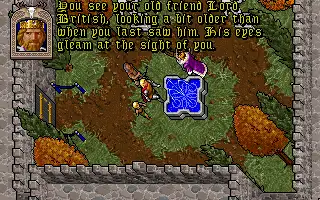
The guys at Origin Systems managed to roll out something revolutionary back in 1992: a truly living, breathing world where you could literally touch every object, where NPCs followed their own schedules, and deep immersion was valued far above pretty graphics.
You play as the Avatar, investigating a brutal murder in Britannia and along the way uncovering a conspiracy involving the Fellowship cult. The world here feels genuinely alive in a way that makes modern games look nervous in the corner.
The complete lack of loading screens while traveling across the world map gave an unprecedented sense of world continuity. The Guardian does a great job as the main villain, but Britannia itself effortlessly steals all the attention.
Here you can bake bread, if you get your hands on some flour and find an oven. You can play a tune on musical instruments. Heck, you can even accidentally poison yourself to death if you decide to experiment with alchemical reagents! For 1992, this level of interactivity was completely mind-blowing.
| ✅ Pros | ❌ Cons |
| Amazingly interactive world interaction systems | The combat system is made as clunky as possible and constantly annoys |
| A seamless open world that doesn’t get interrupted by loading screens | Companion pathfinding algorithms are just terrible |
| Deep possibilities for fully role-playing your character | The original version is full of critical bugs that break the game |
| A living NPC schedule creates incredible immersion | Inventory management is its own form of torture |
| An adult story tangled with corruption and sinister cults | The interface is hopelessly outdated and will require iron patience from you |
Is it even worth spending time on Ultima VII today?
You can enjoy this game if world-building matters more to you than polished-to-a-shine mechanics. It's made for gamers who can overlook technical clunkiness to get a taste of the developers' pure ambitions. After all, modern immersive sim projects exist solely thanks to the boldness and scope of Ultima VII. If modest hardware is part of the reason you are looking back, these RPGs for low-end PCs also include later games worth considering.
Chrono Trigger
🖥️ Available on: PC, Nintendo DS, SNES, iOS, Android
⏳ Playtime: 23 hours (main story), 45 hours (with extra content)
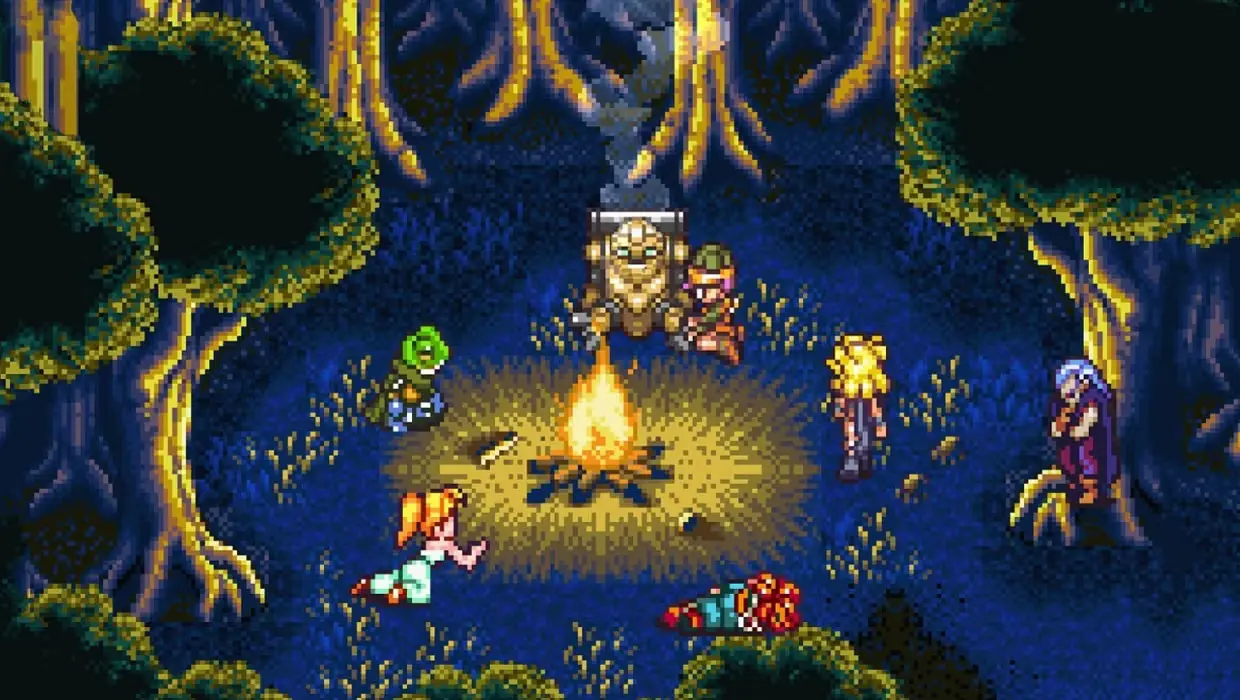
The 1995 masterpiece from Square Studio forever defined the face of the JRPG genre: a twisted time-travel storyline, colorful characters, and smooth battles without annoying random encounters. You play as Crono, who accidentally opens a time portal at a city fair and then gets pulled into an epic quest spanning eras from prehistoric times to post-apocalypse.
The story masterfully jumps through centuries as you try to prevent a global catastrophe caused by the terrifying monster Lavos.
The Active Time Battle system keeps fights from dragging into boring slogs. Double and triple techniques let your heroes combo skills, dealing some seriously destructive damage. And the bunch of endings, depending on which point in time you choose to challenge the final boss, is a perfect reason to play through the game over and over. Essentially, this is Japanese RPG design at the peak of its glory.
| ✅ Pros | ❌ Cons |
| Seamless transition to battles without annoying loading screens | The PC port suffers from clunky controls and an awkward interface |
| An incredibly heartfelt and thrilling story about time-jumping | The game is pretty quick to beat by classic JRPG standards |
| Loads of different endings make replayability off the charts | Character progression and squad customization options are pretty limited |
| A brilliant soundtrack by maestro Yasunori Mitsuda | The Steam version completely lacks proper mod support |
| The entry threshold is so low that even a newbie can get the hang of it | Some mechanics might seem a bit too primitive by today's standards |
Is Chrono Trigger the kind of JRPG you’re into?
This game will hit just right if you want a polished, complete experience without spending hundreds of hours on it. It's made for gamers who value a tight narrative pace and cool plot twists over mindless grinding and filler quests. And yes, the time travel gimmick isn’t just for show: it genuinely changes how you approach solving in-game challenges.
Might and Magic VI: The Mandate of Heaven
🖥️ Available on: PC (Windows)
⏳ Gameplay time: 60 hours (main story), 100+ hours (with extra content)
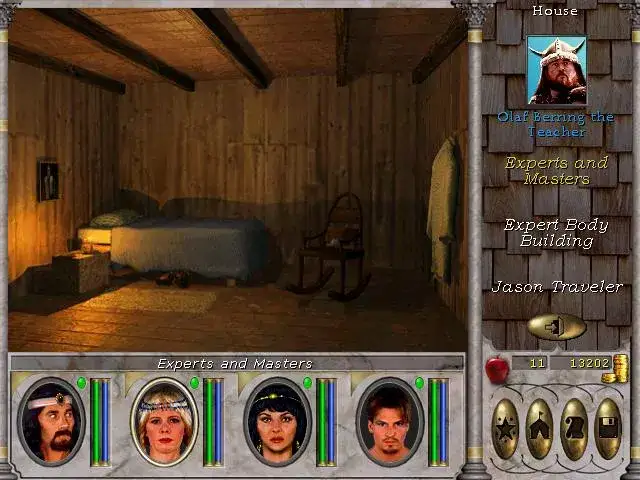
In 1998, New World Computing decided to go all out: they released a game with a massive open world, a party of six heroes, and first-person dungeon crawling, all spiced up with complete freedom to tackle content in any order.
You investigate the mysterious disappearance of the monarch while leveling up your group from green newbies to god-level heroes. The local class advancement system lets you turn ordinary fighters into highly specialized death machines.
The ability to switch on the fly between turn-based battles and real-time action lets you set the pace of the game yourself.
The setting boldly mixes classic fantasy with sci-fi elements: dragons coexist here with blasters simply because the Might and Magic series has always done its own thing. It's old-school in the best sense of the word, where the game trusts you to explore the world on your own without any dumb quest markers.
| ✅ Pros | ❌ Cons |
| A colossal open world that just begs to be explored | The graphics and interface have aged terribly |
| Extremely addictive character progression system for heroes | The local story will be forgotten much faster than the plots of Fallout or BG |
| Complete freedom of nonlinear gameplay | Combat can become dull and repetitive over time |
| Deep options for squad building and customization | The game is catastrophically lacking modern comfort features |
| Great replayability thanks to different class combinations | The lack of clear quest directions will have you failing more than once |
Will MM6 appeal to fans of party RPGs?
This game will give you a ton of fun if you respect old-school dungeon crawlers, where every bit of progress feels truly earned. It’s made for gamers who don’t need modern casual mechanics and who enjoy the zen of mapping dungeons themselves and carefully optimizing their builds. And the class advancement system provides great long-term goals, making character progression far more interesting than just grinding levels.
Ultima Underworld: The Stygian Abyss
🖥️ Available on: PC
⏳ Playtime: 20 hours (main story), 30 hours (with extra content)
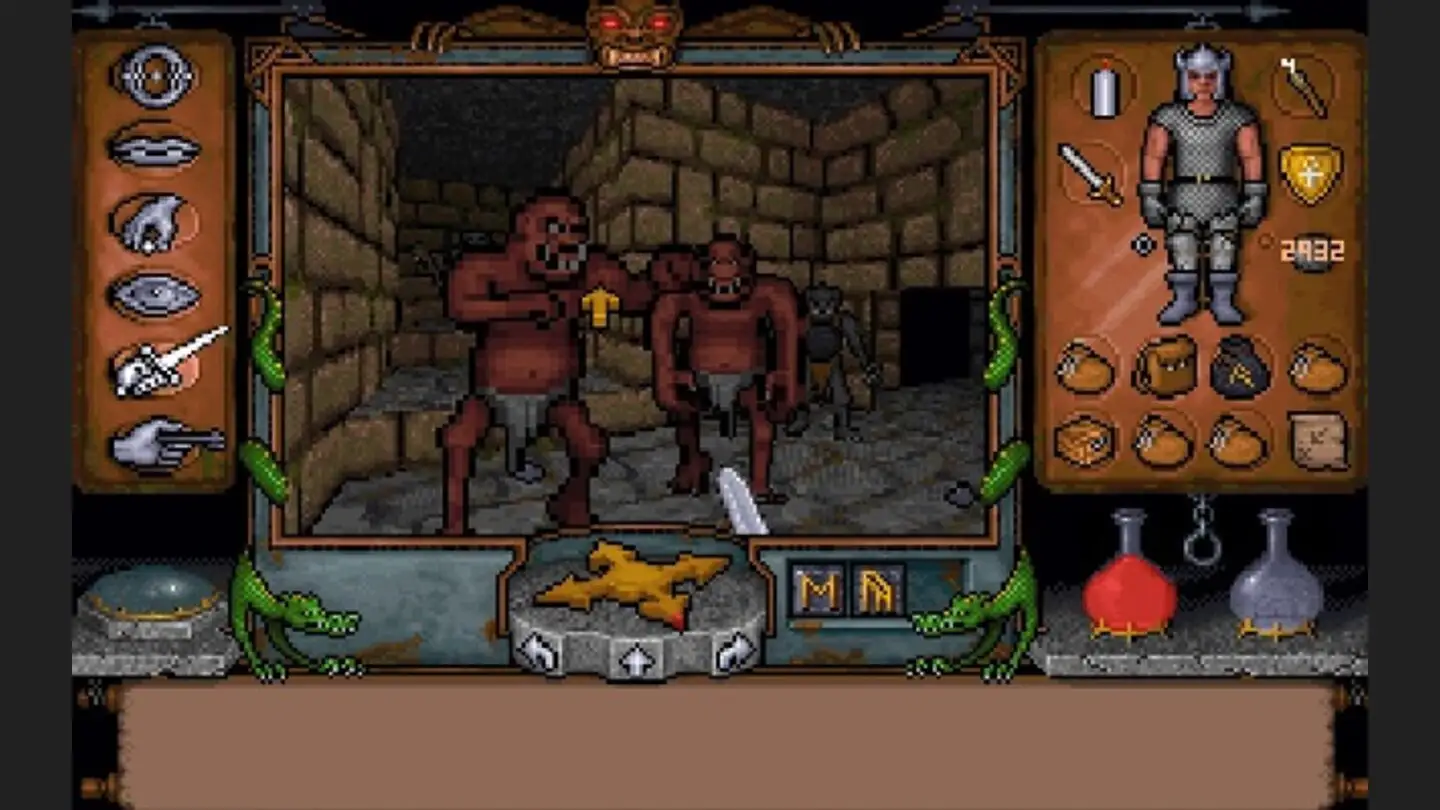
Back in 1992, the geniuses at Looking Glass Studios released the first truly 3D RPG: you've got first-person movement, a genuine physics simulation, and a problem-solving approach that doesn’t treat the player like an idiot.
You’re thrown into the Abyss, deep under Britain, on a false charge of kidnapping. Ahead lie eight levels of dark dungeons, packed with factions, spatial puzzles, and crystal-clear freedom in overcoming obstacles.
You can have heart-to-heart talks with local monsters, trade with them, or just turn them into meat. Magic, stealth, and head-on fights—all of it works and makes sense. The influence of this game can be seen everywhere, from System Shock to Deus Ex.
| ✅ Pros | ❌ Cons |
| Just an unprecedented level of freedom for a game of that era | The local controls feel incredibly archaic and annoying |
| Innovative mechanics | The graphics can crush even the strongest nostalgic feelings |
| This is the first true 3D first-person RPG in history | The learning curve here is more like a sheer cliff |
| Every gameplay problem can be solved in a dozen different ways | The combat system is sorely lacking satisfying impact |
| The game had a colossal influence on modern game design | To enjoy the game today, you'll need to stock up on hellish patience |
Does Ultima Underworld justify all this suffering?
This game will be a real gift for gaming historians and hardcore fans of immersive sims who want to get a feel for the very roots of the genre. It's made for gamers ready to push through awkward controls just to personally experience revolutionary game design. Without UU's innovations, modern games would look different, but that doesn't mean the project can be confidently recommended to everyone without a bunch of caveats.
Which RPG from the '90s should you play?
And now, let's be honest about what I'd actually recommend, based on your tastes. Fallout will always remain my top recommendation for anyone looking for choices that can drastically reshape the entire story. The game is dark, sometimes extremely ironic. Yes, turn-based combat might feel drawn-out today, but the freedom of action? It's still unmatched.
Fallout will always remain my top recommendation for anyone looking for choices that can drastically reshape the entire story.
Diablo is the most obvious choice if you just want to gleefully click your way through demons until colorful loot spills out and blood starts flying. It's a simple, addictive thing, perfect for unwinding after a tough day at work. The game doesn’t even try to seem deep: it knows exactly what it is and nails its formula completely. Back in the day, it was Diablo that defined the RPG genre.
Fans of Baldur’s Gate, who also love D&D tabletop sessions, will find absolutely everything they were looking for here. The adaptation of AD&D rules is done so meticulously that you and your friends will spend hours debating THAC0 mechanics, and the chemistry between teammates will give you a ton of unforgettable moments. If you’ve ever run a tabletop campaign, BG will make you feel like you’re coming home.